Best Online Classes for Australian Curriculum (Primary to Year 12) – 2026 Guide
Finding the best online classes for the Australian Curriculum isn’t about choosing the “most popular” program—it’s about choosing the right format + teaching system for your child’s stage (Primary, Lower Secondary, Senior Secondary) and goals (foundation building, confidence, exam performance). The best online classes feel structured and supportive, with clear weekly targets, strong feedback, and measurable progress.This guide breaks down what to look for from Primary to Year 12, what a good online class should include, and a simple parent checklist to choose well.
What “best online classes” should include (non‑negotiables)
No matter the year level, strong online classes should have:
- Diagnostic first (baseline + gap analysis)
- Personalised weekly plan (targets for 4–8 weeks)
- Strong feedback/correction
- Maths/Science: step-by-step correction + method focus
- English: line-by-line feedback + writing structure frameworks
- Short practice between classes (consistent, not heavy)
- Progress tracking (weekly notes + monthly summary)
- Tutor fit + engagement (student explains, not just listens)
If a program is only “teaching content” without correction and tracking, improvement is usually slow.
Primary (Foundation to Year 6): what the best online classes look like
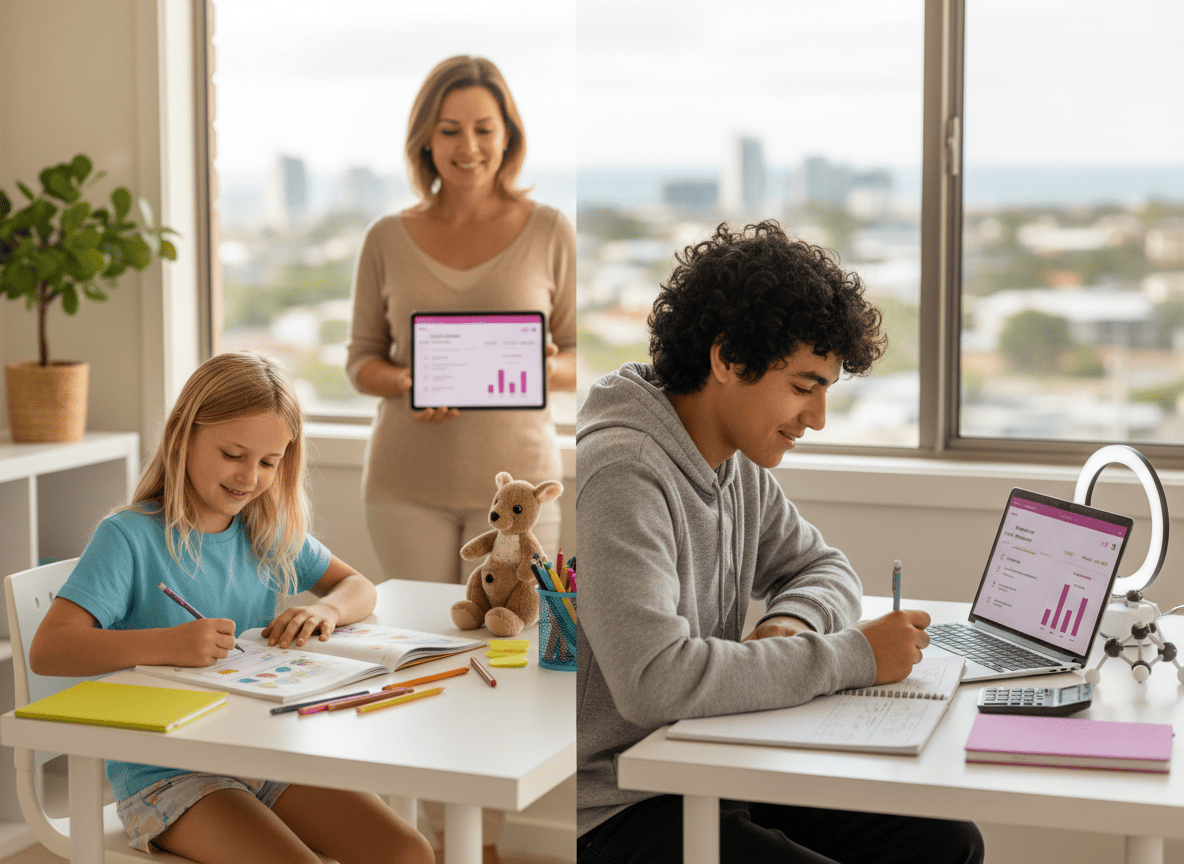
At Primary level, the goal is strong foundations + confidence.
Best focus areas
- Maths: number sense, place value, times tables, fractions/decimals, word problems
- English: reading fluency, comprehension, spelling, sentence building, paragraph writing
- Study habits: attention, routine, and independent learning
What to look for in Primary online classes
- Short, engaging lessons (kids learn better in small chunks)
- Visual explanations + lots of guided practice
- Gentle correction (confidence matters at this stage)
- Parent-friendly updates (what was covered + what to practise)
Best format: usually 1-to-1 or very small group (so the child stays engaged).
Lower Secondary (Years 7–9): where many students start to struggle
This stage is where gaps show up because the pace increases and questions become more application-based.
Best focus areas
- Maths: algebra foundations, equations, graphs, geometry, problem-solving
- Science: concepts + application questions (not memorising)
- English: structured writing, comprehension technique, vocabulary building
- Study skills: note-taking, revision routines, test strategies
What to look for in Years 7–9 online classes
- Diagnostic + error-pattern tracking (repeated mistakes must be fixed)
- Clear weekly targets and homework that’s short but consistent
- A correction system that teaches why the mistake happened
Best format: 1-to-1 for weak areas; small group for revision if the student is stable.
Senior Secondary (Years 10–12): results depend on exam technique + consistency
For Years 10–12, the difference between “okay” and “excellent” is usually:
- exam technique
- timed practice
- consistent correction and feedback
Best focus areas
- Maths: method marks, accuracy under time, exam-style problems
- Science: structured answers, application, diagrams, keywords
- English: essay planning, argument flow, evidence use, editing under time
- Assessment prep: rubrics, marking criteria, and performance under pressure
What to look for in Years 10–12 online classes
- Timed practice + review (not just teaching)
- Marking aligned to school expectations
- Strong writing feedback (for English/Humanities)
- Clear improvement plan for the next 4–8 weeks
Best format: 1-to-1 is usually best for targeted improvement; group can support revision.
Choosing the right subject support (quick guide)
Maths (Primary–Year 12)
Best online classes include:
- step-by-step explanations
- lots of guided practice
- correction that focuses on method + common traps
- weekly mixed practice (not only one topic)
English (Primary–Year 12)
Best online classes include:
- reading + comprehension strategies
- writing frameworks (paragraph/essay structure)
- line-by-line feedback and rewriting practice
- vocabulary + clarity improvements
Science (Years 7–12)
Best online classes include:
- concept clarity + application questions
- structured answers aligned to marking
- practice + correction (not just notes)
Parent checklist: how to choose the best online classes
Before you enrol, confirm:
- Diagnostic is done first
- 4–8 week weekly plan with targets
- Correction + feedback every session
- Short practice between classes
- Progress tracking + parent updates
- Trial class includes clear next steps
- Tutor explains in a way your child understands
FAQs:-
1) Are online classes effective for the Australian Curriculum?
Yes—when they include structure, correction, practice, and progress tracking. Tutor quality matters more than the platform.
2) How many classes per week are ideal?
Usually 1 class/week per subject is enough with short practice. In exam periods or for weak foundations, 2/week helps.
3) How soon will we see improvement?
Most students show measurable progress in 4–8 weeks with consistent classes and practice.
4) Should we choose 1-to-1 or group classes?
Choose 1-to-1 for faster improvement and confidence. Choose group for revision and routine when the student is stable.
Optional CTA (EdFlik)
EdFlik offers live online classes aligned to the Australian Curriculum (Primary to Year 12), with diagnostics, personalised weekly plans, strong correction, and progress tracking.
Website: https://www.edflik.com
WhatsApp: +918878896600
Email: support@edflik.com
You May Also Like To Read:-