
Best Online Science Classes in Australia (Years 7–10): What to Practise (2026 Guide)
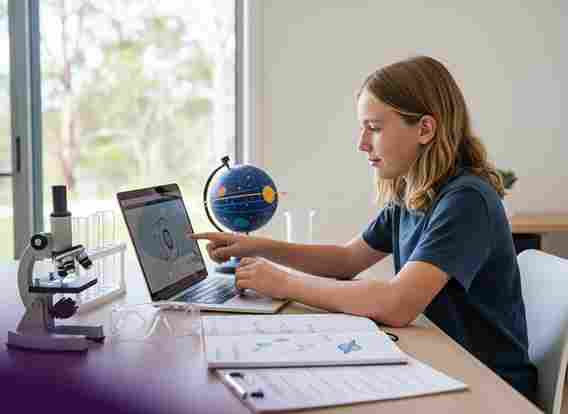
Science in Years 7–10 can feel “easy one term, hard the next” because it’s not just about memorising facts. Students are expected to understand concepts, apply them to new questions, use correct scientific vocabulary, and explain answers clearly. The best online science classes in Australia don’t just teach chapters—they build a system: diagnostic → concept clarity → application practice → correction → progress tracking.This guide explains what to look for in the best online science classes for Years 7–10, plus exactly what students should practise to improve faster.
What the best online science classes include (non‑negotiables)
A strong online science program should have:
- Diagnostic first (baseline + weak topics + common mistakes)
- Concept clarity (simple explanations + visuals)
- Application questions (not only notes)
- Answer structure training (how to write full-mark responses)
- Regular correction + feedback (why the answer is wrong, not just the right answer)
- Weekly practice plan (short, consistent)
- Progress tracking (topic mastery + test performance)
If a class is only “teaching content,” students often still lose marks in tests.
What science students should practise (the real mark boosters)
1) Concept understanding (not memorising)
Students should be able to:
- explain the idea in their own words
- draw a simple diagram (where relevant)
- give a real-life example
Practice tip: after learning a topic, ask your child to teach it back in 60 seconds.
2) Application questions (most students struggle here)
These questions look like:
- “Explain why…”
- “Predict what happens if…”
- “Compare…”
- “Use the data to…”
What to practise weekly:
- 8–12 application questions per topic
- mixed-topic practice every 2–3 weeks (to stop forgetting)
3) Scientific vocabulary + keywords
Marks are often lost because students use vague words like “thing,” “stuff,” “it goes up.”What to practise:
- a small keyword list per topic
- using keywords in full sentences (not just definitions)
4) Writing full-mark answers (structure matters)
Many students know the content but write short, unclear answers.Simple structure to practise:
- Point: answer the question directly
- Because: give the scientific reason
- Therefore: link back to the outcome/result
For longer questions, add an example or data reference.
5) Data and graphs (common in Years 7–10)
Students should practise:
- reading graphs and tables
- identifying trends
- using units correctly
- writing conclusions from data
Weekly practice idea: 1 short data set + 5 questions.
6) Common “easy marks” practice
These are quick wins:
- units and conversions
- labelling diagrams
- definitions with examples
- safety and method steps for experiments
What to practise by year level (quick guide)
Year 7–8
Focus on:
- core concepts + vocabulary
- simple application questions
- diagrams and definitions
- basic data interpretation
Year 9–10
Focus on:
- deeper application and “explain why” questions
- multi-step reasoning
- stronger answer structure
- mixed-topic revision (tests cover more content)
Best format: 1-to-1 vs small group
1-to-1 online science classes are best when:
- your child is confused and needs concept clarity
- they struggle to write full answers
- they need faster improvement
Small group classes are best when:
- your child is stable and needs routine + revision
- they benefit from peer discussion
Best value option: hybrid
1-to-1 for weak topics + group for weekly practice.
Parent checklist: how to choose the best online science class
Before enrolling, confirm:
- Diagnostic test included
- Weekly plan with clear targets
- Application questions are included (not only notes)
- Correction teaches why answers are wrong
- Answer structure is taught (full-mark responses)
- Data/graph practice is included
- Progress tracking + parent updates
FAQs
1) How many science classes per week are ideal (Years 7–10)?
Usually 1 class/week plus short practice is enough. If your child is behind or tests are coming, 2/week helps.
2) How soon will we see improvement in science?
Most students show measurable progress in 4–8 weeks with consistent practice and correction.
3) Is online science tutoring effective?
Yes—if it includes concept clarity, application practice, and strong correction. Method matters more than online vs in-person.
4) What’s the fastest way to improve science marks?
Practise application questions weekly, learn keywords, and train answer structure with correction.
Optional CTA (EdFlik)
EdFlik offers live online science classes for Years 7–10 with diagnostics, concept clarity, application practice, strong correction, and progress tracking.
Website: https://www.edflik.com
WhatsApp: +918878896600
Email: support@edflik.com
You May Also Like To Read:-