
CBSE Class 12 Chemistry 2026: Most Important Chapters + Reaction Types (High-Scoring Guide)
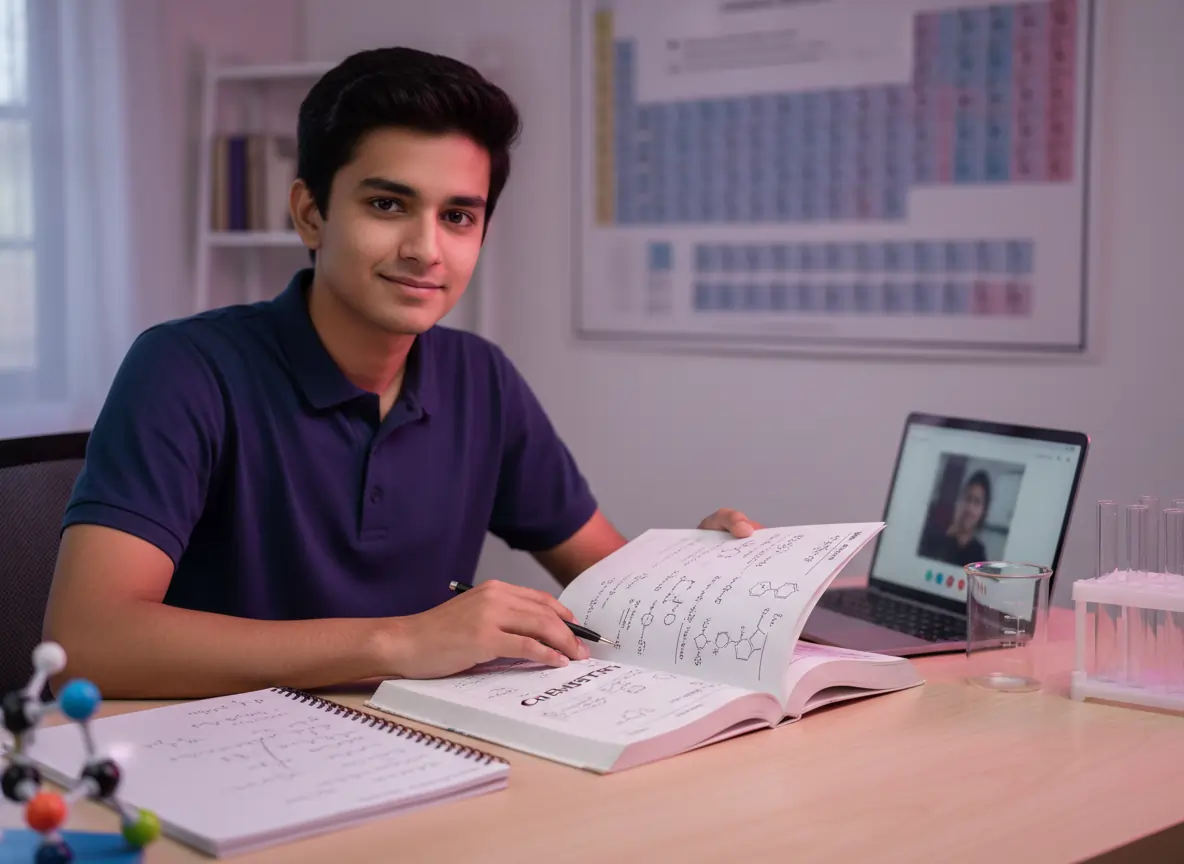
CBSE Class 12 Chemistry can feel overwhelming because there are many chapters—but the exam usually rewards students who revise high-weight concepts, practise named reaction patterns, and write answers using the correct reagents + conditions + products. If you focus on the right chapters and reaction types, you can improve marks quickly without “studying everything equally.”This 2026 guide covers the most important Class 12 Chemistry chapters and the reaction types you must master for boards.
1) The Most Important Chapters for CBSE Class 12 Chemistry (2026)
A) Organic Chemistry (usually the biggest scoring area)
Organic is high scoring because patterns repeat and marking is step/logic based.
1) Haloalkanes & Haloarenes
Why it’s important:
- Direct questions on mechanisms and conversions
- Many board-style reaction pathways
Must-know:
- SN1 vs SN2 (basic idea + factors)
- Nucleophilic substitution reactions
- Preparation and properties
2) Alcohols, Phenols & Ethers
Must-know:
- Dehydration, oxidation, substitution
- Distinguishing tests (where applicable)
- Conversions between alcohols/alkenes/ethers
3) Aldehydes, Ketones & Carboxylic Acids
Very high yield.
Must-know:
- Nucleophilic addition reactions
- Oxidation/reduction trends
- Important name reactions and tests
4) Amines
Must-know:
- Basicity order + reasoning
- Diazotisation and coupling (aniline-based)
- Hoffmann bromamide reaction (common)
5) Biomolecules (and Polymers + Chemistry in Everyday Life)
These are often “theory-friendly” and scoring with clear NCERT keywords.
Must-know:
- Carbohydrates, proteins, nucleic acids (definitions + examples)
- Polymer types and uses
- Drugs/cleansing agents basics (NCERT language)
B) Physical Chemistry (concept + numericals)
6) Electrochemistry
High frequency + scoring if you practise properly.
Must-know:
- Nernst equation (basic use)
- Cell potential, Gibbs relation idea
- Conductance, Kohlrausch’s law basics
7) Chemical Kinetics
Must-know:
- Rate law, order, units
- Half-life for first order (common)
- Arrhenius equation concept (temperature effect)
8) Solutions
Must-know:
- Raoult’s law, colligative properties
- Abnormal molar mass (van’t Hoff factor idea)
- Numericals practice (very important)
9) Surface Chemistry (short + scoring)
Must-know:
- Adsorption types, isotherms (basic)
- Catalysis, colloids, emulsions
C) Inorganic Chemistry (NCERT-based, needs smart revision)
10) Coordination Compounds
One of the most important chapters.
Must-know:
- IUPAC naming
- Isomerism
- Bonding theories basics (VBT/CFT idea)
- Magnetic behaviour and colour (basic reasoning)
11) d- and f-Block Elements
Must-know:
- trends, oxidation states
- KMnO₄ and K₂Cr₂O₇ reactions (very common)
- important compounds and properties (NCERT lines)
12) p-Block Elements (Group 15/16/17/18 portions as per syllabus)
Must-know:
- trends + key compounds
- oxoacids, interhalogens (as applicable)
- NCERT-based direct questions
2) Most Important Reaction Types to Master (Organic + Inorganic)
A) Organic Reaction Types (must-do for 2026)
These are the patterns that repeat in boards:
1) Nucleophilic substitution (SN1/SN2)
Where: Haloalkanes, Alcohols
What to practise:
- reagent selection
- major product prediction
- conditions (aqueous vs alcoholic)
2) Elimination reactions
Where: Alcohols, Haloalkanes
What to practise:
- dehydration to alkenes
- Saytzeff vs Hofmann idea (basic)
3) Oxidation and reduction in organic
Where: Alcohols → aldehydes/ketones/acids
What to practise:
- common oxidising agents (acidified KMnO₄, K₂Cr₂O₇, PCC basics)
- reduction agents (NaBH₄, LiAlH₄, H₂/Ni)
4) Nucleophilic addition (carbonyl chemistry)
Where: Aldehydes & Ketones
What to practise:
- HCN addition, bisulphite addition (as per NCERT)
- conversions and product formation logic
5) Named reactions (high scoring)
Commonly tested ones include:
- Aldol condensation
- Cannizzaro reaction
- Hell–Volhard–Zelinsky (HVZ)
- Hoffmann bromamide
- Diazotisation and coupling reactions
Tip: Don’t just memorise names—memorise reactants + reagents + product.
6) Aromatic electrophilic substitution (basic)
Where: Phenols/anilines (orientation)
What to practise:
- activating/deactivating groups (basic)
- ortho/para directing vs meta directing (simple rules)
B) Inorganic “Reaction Sets” (board favourites)
1) KMnO₄ and K₂Cr₂O₇ reactions (d-block)
These are classic board questions.
What to practise:
- oxidation in acidic/neutral/alkaline medium
- colour changes + products
2) Coordination compound naming + isomerism
Not a “reaction type” but a repeated scoring pattern.
What to practise:
- naming step-by-step
- identify linkage/ionisation/geometrical/optical isomers
3) How to Study These Chapters (High Score Method)
Step 1: NCERT line-by-line for Inorganic + Biomolecules
Many 1-mark/2-mark questions are directly from NCERT wording.
Step 2: Make a “Reagents and Conversions” notebook for Organic
Create 3 pages:
- alcohol conversions
- carbonyl conversions
- amines + diazonium conversions
Step 3: Practise numericals daily for Physical
Even 20 minutes/day makes a big difference.
- Solutions + Electrochem + Kinetics are the best ROI.
Step 4: Solve sample papers like this
- timed attempt
- strict checking
- rewrite wrong answers using correct keywords/reagents
- maintain an error log
4) 4-Week Revision Plan (Quick and Practical)
Week 1: Physical base
- Solutions + Electrochemistry + Kinetics
- daily numericals + formula sheet
Week 2: Organic core
- Haloalkanes, Alcohols/Phenols/Ethers
- Aldehydes/Ketones/Carboxylic acids
Week 3: Organic + Inorganic scoring
- Amines + Biomolecules
- Coordination Compounds + d/f block
Week 4: Full revision + papers
- p-block + Surface Chemistry + Polymers/Chem in Everyday Life
- 3–5 sample papers + correction
FAQs:-
Which is the most important chapter in Class 12 Chemistry?
Most students find Organic (carbonyls + amines) and Coordination Compounds the most scoring, while Electrochemistry/Solutions/Kinetics are high ROI for numericals.
How do I memorise reactions faster?
Don’t memorise randomly. Group by reaction type (substitution, oxidation, reduction, addition) and practise conversions repeatedly.
Is NCERT enough for 95+?
NCERT is essential. For top scores, add exemplar/sample papers and practise writing complete reactions with conditions.
Optional CTA (EdFlik)
EdFlik supports CBSE Class 12 Chemistry students with live 1:1 online tutoring, reaction/conversion practice, numericals training, and exam-focused revision plans.
Website: https://www.edflik.com
WhatsApp: +918878896600
Email: support@edflik.com
You May Like To Read:-