
IB Economics Tutor: How to Master Paper 1 and Paper 2 (2026 Guide)
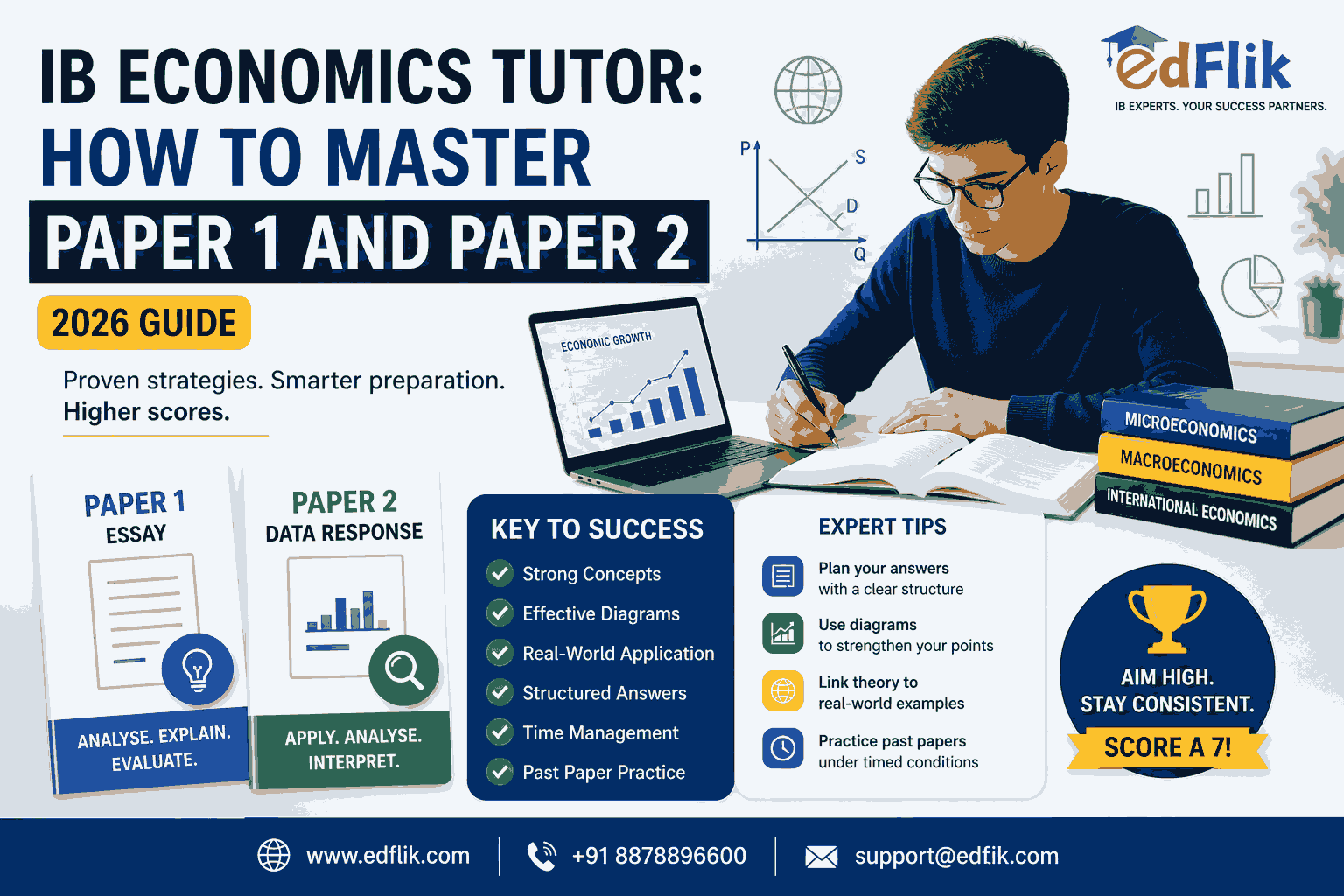
Scoring high in IB Economics isn’t just about understanding theory—it’s about applying concepts, structuring answers, and mastering exam technique.
Students preparing under the International Baccalaureate often struggle with:
👉 Writing strong essays for Paper 1
👉 Applying concepts in data response (Paper 2)
👉 Managing time during exams
This guide will show you exactly how to master both Paper 1 and Paper 2 in 2026.
🎯 IB Economics Exam Structure (Quick Overview)
| Paper | Type | Skills Tested |
|---|---|---|
| Paper 1 | Essay | Theory + evaluation |
| Paper 2 | Data Response | Application + analysis |
👉 To score a 6 or 7, you must excel in both papers.
📝 How to Master IB Economics Paper 1 (Essay Paper)
Paper 1 tests your ability to:
- Explain economic concepts
- Use diagrams effectively
- Evaluate arguments
🔥 1. Perfect Your Answer Structure
Use this format:
Introduction
- Define key terms
Body Paragraphs
- Explain concept
- Draw diagram
- Apply real-world example
Evaluation (MOST IMPORTANT)
- Advantages vs disadvantages
- Short-term vs long-term effects
- Stakeholder impact
👉 Without evaluation, you won’t reach top marks.
📊 2. Master Diagrams
Common diagrams include:
- Supply & demand
- Elasticity
- Market failure
👉 Always:
- Label clearly
- Refer to diagram in explanation
🧠 3. Practice Real Questions
- Solve past Paper 1 questions
- Focus on 10-mark and 15-mark essays
👉 Repetition builds confidence.
❌ Common Paper 1 Mistakes
- Writing theory without application
- Missing evaluation
- Poor diagram labeling
- Weak structure
📊 How to Master IB Economics Paper 2 (Data Response)
Paper 2 is all about:
👉 Applying theory to real-world data
🔍 1. Read the Case Study Carefully
- Highlight key data
- Identify economic concepts
👉 Don’t rush—understanding the question is half the battle.
✍️ 2. Answer Precisely
- Use data from the passage
- Avoid unnecessary theory
👉 Keep answers relevant and focused.
📈 3. Apply Economic Concepts
Examples:
- Inflation
- Unemployment
- Government intervention
👉 Always link answers to the data provided.
⏱️ 4. Manage Time Properly
- Don’t spend too long on one question
- Allocate time based on marks
❌ Common Paper 2 Mistakes
- Ignoring data in answers
- Writing generic responses
- Not linking theory to real-world context
🚀 Pro Strategy to Score 7 in IB Economics
✅ Practice Past Papers Regularly
Focus on last 5–10 years.
✅ Build Real-World Examples
Use current economic events.
✅ Focus on Weak Areas
Identify mistakes and improve.
✅ Take Mock Tests
Simulate exam conditions.
📅 4-Week Study Plan (Quick Boost Strategy)
Week 1:
- Revise core concepts
- Practice diagrams
Week 2:
- Solve Paper 1 essays
- Improve structure
Week 3:
- Practice Paper 2 case studies
- Focus on application
Week 4:
- Full-length mock tests
- Final revision
❓ FAQs (Search Optimized)
Is IB Economics hard?
It’s manageable with the right strategy and consistent practice.
How to score 7 in IB Economics?
Focus on structure, evaluation, diagrams, and past paper practice.
What is the difference between Paper 1 and Paper 2?
Paper 1 is essay-based, while Paper 2 focuses on data analysis and application.
How important are diagrams?
Very important—they can significantly improve your score.
🎓 Final Thoughts
Success in IB Economics comes down to:
👉 Concept clarity
👉 Structured answers
👉 Consistent practice
Master these, and a 6 or 7 is absolutely achievable.
📞 Need Help with IB Economics?
Get expert guidance with EdFlik:
- 1-on-1 IB Economics tutoring
- Paper 1 & Paper 2 strategies
- Exam-focused preparation
- Personalized learning plans
🌐 Website:-https://www.edflik.com
📞 Contact:-+91 8878896600
📧 Email:-support@edflik.com
You May Also Like To Read:-