IGCSE Computer Science Tutor Online for UAE Students
IGCSE Computer Science brings together two kinds of learning. Students study how computer systems work in theory, and they also practise writing and testing programs. That mix can be exciting, but it can also feel like a lot to manage, especially during a busy school year. Many students benefit from a steady, patient tutor who helps them connect the two sides.
This guide is for parents in the UAE and across the GCC who are thinking about online tutoring for IGCSE Computer Science. It covers what the course involves, what to look for in a tutor and how a free trial class can help you decide.
What the Course Involves
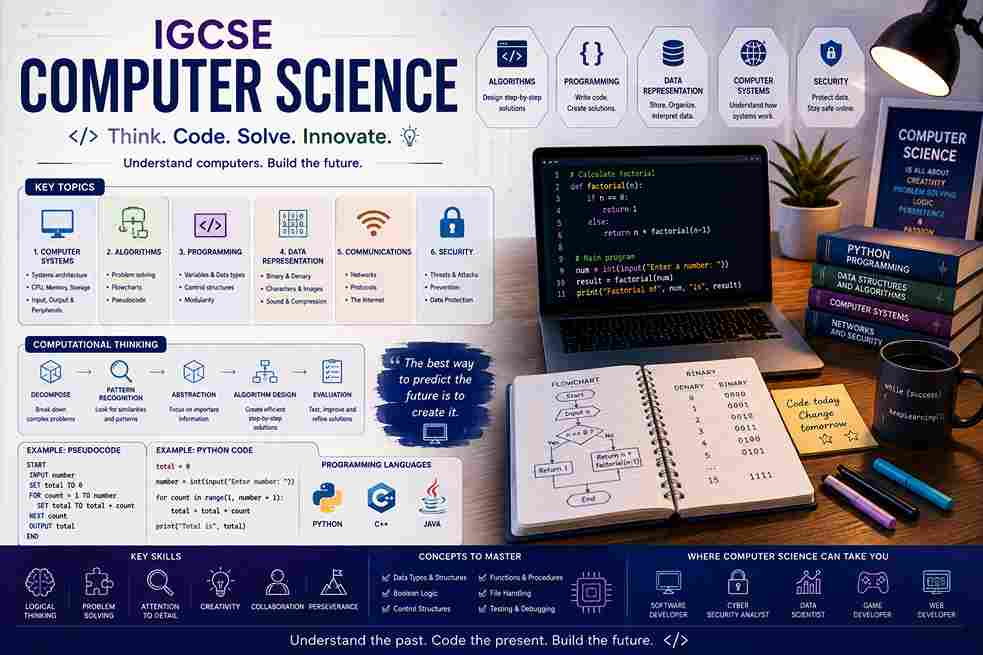
The course usually covers topics such as data representation, computer systems, algorithms, programming and the impact of technology. Students learn how information is stored and processed, how hardware and software work together, and how to design a simple solution to a problem.
Programming is a key part of the course. Students need to write, read, test and correct code. They also need to answer theory questions clearly, using the right terms. Both skills take regular practice.
Ask the tutor which programming language and practice resources they use. Then check the current official syllabus or specification for your child's exam series, because details can change.
Programming Practice and Theory Papers
Programming practice helps students understand how an algorithm works step by step. A good tutor asks your child to predict what a short piece of code will do, then tests the prediction. This builds understanding faster than memorising rules.
Theory papers ask students to explain concepts in writing. A tutor can help your child use precise terms, give clear definitions and structure answers so the reader can follow the logic. Many students lose marks because they know the idea but do not express it fully. Regular practice with feedback helps close that gap.
What a Helpful One-to-One Lesson Looks Like
A one-hour one-to-one lesson lets the tutor focus on your child's needs. A typical session might begin with a quick check of the last topic, move to a new concept with an example, and end with a short task. If your child is working on code, the tutor can review it together and suggest one or two improvements.
During a free trial class, look for these signs:
- The tutor asks your child to explain their thinking, not only to type an answer.
- Code is tested with simple examples, so mistakes are easy to spot.
- Theory answers are reviewed for accuracy, clarity and the right terminology.
- Feedback is specific and encouraging, with a clear next step.
- Your child knows what to practise before the next lesson.
Why Online One-to-One Support Can Help
Computer Science is a subject where a tutor can see your child's work as it develops. In an online lesson, they can look at code and notes on screen and respond straight away. Your child can also ask questions without the pressure of a busy classroom.
Many students need a device with a keyboard and a stable internet connection for practical work. Lessons also work well alongside school routines, because a regular weekly slot lets your child keep pace with class topics rather than falling behind during a busy term. Before you book, ask the tutor what equipment your child will need for lessons and for practice at home.
Screen sharing is useful in this subject. The tutor can show a technique on their screen, then let your child try it on their own. This keeps the lesson active and makes it easy to see exactly where understanding breaks down.
Building Theory Answers Step by Step
Many theory questions reward a clear, ordered answer. A useful habit is to state the key term first, then explain what it does, and finish with a short example. For instance, a student describing an algorithm might name the input, list the steps in order and say what the output looks like. This structure keeps answers focused and makes it easier for the examiner to follow the logic.
A tutor can model this structure with one question, then ask your child to try a similar one. Over several weeks, the pattern becomes automatic, and your child spends less time worrying about how to start an answer.
Learning Through Small Practice Tasks
Short, focused tasks help students build confidence quickly. Your child might trace a simple algorithm on paper, predict the output of a short program or fix a bug in a few lines. Each task has a clear goal, so your child can see exactly what they have learned. A tutor can choose tasks that match your child's level and gradually make them more demanding.
Keeping Notes and Revision Organised
Good notes make revision much easier. Encourage your child to keep one page for key terms, one for each type of algorithm they meet and one for common mistakes. A simple flowchart or diagram can summarise a process in a way that is easy to review. Revisiting these notes weekly keeps the ideas fresh well before the exam season.
Supporting Your Child at Home
You do not need to know the answers to help. Ask your child to explain what their code or answer is meant to do. Ask what they expected to happen and what actually happened. These questions help them find their own mistakes, which is more useful than being given the answer. Encourage short, regular practice rather than long sessions the night before a test, and celebrate small steps forward.
A Practical Checklist for Parents
1. Ask the tutor how they balance programming practice with theory papers.
2. Check that your child has a suitable device and internet connection for lessons.
3. Confirm that lessons are about one hour and fit your family's timetable.
4. Ask how progress will be shared with you, and how often.
5. Book a free trial class and see whether your child feels comfortable asking questions.
6. Check the current official syllabus with your child, so you both know what is assessed.
How EdFlik can help
EdFlik offers live, one-to-one online classes for children and teens aged 3 to 18, including IGCSE Computer Science. Your child works with one tutor who can focus on their own questions, programming practice and exam goals. Classes are about one hour, and pricing starts from AED 45 per class.
Every family can begin with a free trial class. It is a low-pressure way to see how the tutor works and how your child responds. To book, visit www.edflik.com or email support@edflik.com.
Conclusion
IGCSE Computer Science rewards students who practise regularly and explain their thinking clearly. Look for a tutor who makes programming feel approachable, supports theory answers and gives honest feedback. Check the current official syllabus, ask the questions in this guide and take a free trial. With steady practice, your child can build confidence in a subject that is useful well beyond the exam.
Frequently Asked Questions
What does IGCSE Computer Science cover?
The course usually includes data representation, computer systems, algorithms, programming and the impact of technology. Check the current official syllabus or specification for your child's exam series, as the detail can change.
Which programming language is used in the course?
Ask the tutor which language they teach with and which resources they use. Your child's school can also confirm what is expected. Check the current official syllabus for the requirements that apply to your child.
Can a tutor help with theory paper answers?
Yes. A tutor can help your child use precise terms, structure answers clearly and check that each point is fully explained. Regular practice with feedback is one of the most effective ways to improve written answers.
Does my child need a computer at home?
Practical programming usually needs a suitable device and a stable internet connection. Ask the tutor what equipment is recommended for lessons and home practice before you book your first class.
How soon can my child start a free trial?
Visit www.edflik.com to book, or email support@edflik.com with your child's year group and preferred times. The team will help you arrange a trial class that suits your timetable. Mention your child's current topics so the trial can start in the right place.