Indian & Expat Students in Saudi Arabia: How to Get the Best Online Tutoring

Indian and expat families across Saudi Arabia often want the same outcome: steady grades, less stress, and a clear learning routine—especially when children are adjusting to a new school, new teachers, and a faster academic pace.Whether your child is studying IB, IGCSE/British, American, CBSE, or ICSE, the right online tutor can help with concept clarity, homework discipline, exam technique, and confidence—without adding travel time to an already busy week.
Quick Answer: What’s the Best Online Tutoring in Saudi Arabia?
The best online tutoring for students in Saudi Arabia is 1:1, curriculum-specific, and plan-based.
That means the tutor matches your child’s exact curriculum and grade, follows the school syllabus, and uses a weekly plan with practice plus feedback (not random worksheets).
Why Online Tutoring Is Growing Fast in Saudi Arabia
Families in Riyadh, Jeddah, Dammam, Khobar, Dhahran, Jubail, Yanbu, Makkah, Madinah, Taif, Abha, Khamis Mushait, Jazan, Tabuk, Al Ahsa (Hofuf), Qassim (Buraidah), Hail, and Najran are choosing online tutoring because it solves common expat challenges:
- Curriculum changes and gaps when switching schools or boards
- Limited individual attention in school classrooms
- Exam pressure (especially in board years and higher grades)
- Busy schedules (school plus homework plus activities)
- Need for specialist teachers in Math, Science, and academic writing
Online tutoring also makes it easier to access experienced teachers who understand your curriculum, even if you live far from big tuition centers.
1:1 Online Tutoring vs Group Tuition: What Works Better?
Group tuition can be useful for general support, but 1:1 tutoring is usually the best option when a child needs faster improvement because it focuses on one student’s:
- Current level (diagnostic understanding)
- Weak topics
- School pace
- Exam pattern
- Learning style and confidence
1:1 is especially helpful if your child is behind in concepts, feels anxious in class, needs writing feedback, or has a tight weekly schedule.
What to Look for in a Great Online Tutor (Parent Checklist)
To choose a tutor that genuinely helps (and not just “covers chapters”), use this checklist.
1) Exact Curriculum and Grade Match
Ask clearly:
- Which curriculum do you teach? (IB / IGCSE / American / CBSE / ICSE)
- Which grades and levels? (Example: IGCSE Core vs Extended, IB SL vs HL)
- Can you follow my child’s school textbook or syllabus?
A tutor who doesn’t match the curriculum often teaches the right topic in the wrong way.
2) A Weekly Plan (Not Random Worksheets)
A strong tutor can explain:
- What will be covered each week
- What homework will be given and checked
- How mistakes will be tracked and fixed
- When exam practice will start
3) Strong Explanation Plus Strong Practice
Good tutoring is not only teaching—it’s guided practice.Look for:
- Step-by-step solving (especially for Math and numericals)
- Correction and feedback (not just “good job”)
- Practice that increases difficulty gradually
4) Progress Updates Parents Can Understand
You should receive simple updates like:
- What was covered
- What improved
- What needs work next week
- What the student should practice at home
5) Trial Class Before Committing
A trial class should show:
- Tutor clarity and communication
- Student comfort in asking doubts
- Whether the tutor understands curriculum expectations
Most Popular Subjects for Online Tutoring (And Why)
Mathematics
Math is the number one subject where students need consistent support because it builds on earlier topics.Online Math tutoring helps with:
- Concept gaps (fractions, algebra, functions, geometry)
- Accuracy and speed
- Exam-style practice and time management
Science (Physics, Chemistry, Biology)
Science becomes difficult when students try to memorize without understanding.Tutoring helps with:
- Numericals and problem-solving
- Diagrams, definitions, and explanation writing
- Building a revision system for tests and finals
English (Reading and Academic Writing)
Many students lose marks because of weak structure, grammar, and unclear answers—even when they understand the topic.Tutoring supports:
- Paragraph structure and formal writing
- Comprehension strategies
- Exam-style answers with feedback
Computer Science / Coding
More schools are adding CS, and students often need help with logic and consistent practice.Tutoring can cover:
- Programming basics (Python / Scratch depending on grade)
- Problem-solving and projects
- Exam preparation (where applicable)
Tips by Curriculum (So Tutoring Matches Your School)
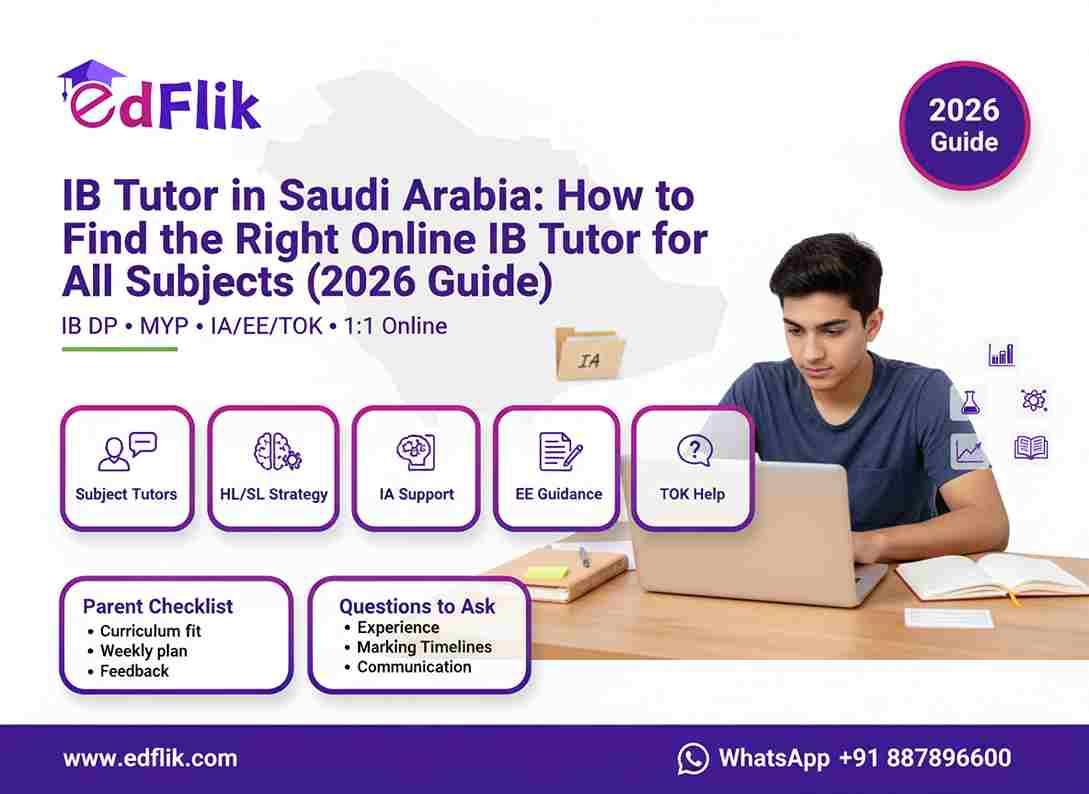
IB (PYP / MYP / DP)
- Choose tutors who understand rubrics and assessment criteria
- For DP, ask for support with IA / EE / TOK if required
- Use a plan that mixes concept work plus timed practice
IGCSE / British Curriculum
- Confirm the board (Cambridge / Edexcel) and level
- Use topic-wise practice first, then past papers with review
- Focus on accuracy, method marks (where relevant), and timing
American Curriculum
- Choose tutoring aligned to school standards and assessments
- Build consistency: weekly targets plus quizzes plus review
- If SAT/AP is planned later, strengthen foundations early
CBSE / ICSE
- Ensure tutoring follows NCERT or school textbooks and exam pattern
- Focus on concept clarity plus writing practice plus regular tests
- Avoid last-minute memorization-only learning
Common Mistakes Parents Should Avoid
- Choosing only based on the lowest price
- Taking too many classes without a plan (burnout)
- Switching tutors too often (no consistency)
- Ignoring fundamentals and focusing only on “finishing chapters”
- Not asking for progress updates or feedback
A Simple Weekly Study Plan (Works for Most Curricula)
A practical structure many families follow:
- Two tutoring sessions per week (per subject)
- Two practice blocks per week (30 to 60 minutes each)
- One weekly review (mistakes plus re-do plus mini test)
- Monthly checkpoint (topic test plus parent update)
If your child is in an exam year, add timed papers weekly once the basics are stable.
FAQs
Is online tutoring effective for students in Saudi Arabia?
Yes—when it is 1:1, curriculum-matched, and plan-based, with regular practice and feedback.
Which cities in Saudi Arabia can use online tutoring?
Online tutoring works anywhere, including Riyadh, Jeddah, Dammam, Khobar, Dhahran, Jubail, Yanbu, Makkah, Madinah, Taif, Abha, Khamis Mushait, Jazan, Tabuk, Al Ahsa (Hofuf), Qassim (Buraidah), Hail, and Najran.
Which subjects do students most often need help with?
Math, Science (Physics/Chemistry/Biology), English writing, and Computer Science are the most common.
How do I choose the right tutor quickly?
Start with a trial class, confirm the exact curriculum and grade, and ask for a weekly plan plus progress updates.
Final Thoughts
The best online tutor is not the one who teaches the most hours. It’s the one who teaches the right things in the right order, tracks mistakes, and builds confidence week by week.If you choose a curriculum-specific tutor and follow a simple weekly routine, most students develop clearer understanding, better homework habits, and stronger exam performance over time.
Looking for Online Tutoring in Saudi Arabia?
EdFlik offers live 1:1 online classes for students in IB, IGCSE/British, American, CBSE, and ICSE.
Website: https://www.edflik.com
WhatsApp: +91 8878896600
Email: support@edflik.com