Math Tutor in Dubai: Online vs Home Tutoring, Compared for Parents
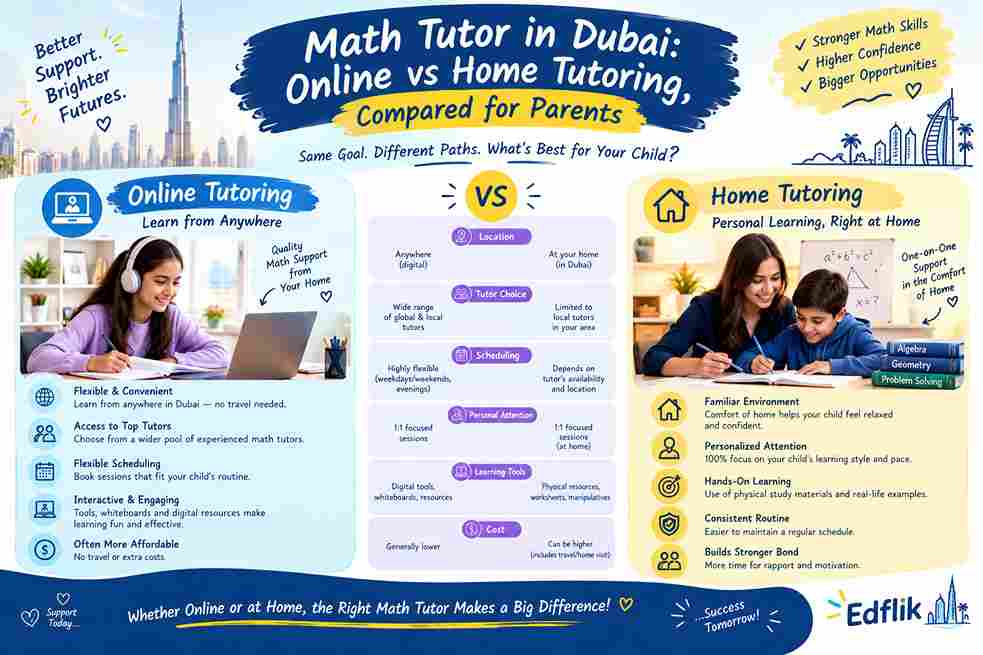
When your child is struggling with maths, the first question is usually "where do we find help?" The second is "should the tutor come to our home, or should we study online?" Both options can work well. The right choice depends on your child, your schedule, your budget and what kind of support your family needs.
This guide compares online and home maths tutoring fairly, so you can make a decision that suits your family. Home tutoring has real strengths, and so does online tutoring. The aim here is to help you ask the right questions and know what to look for, whichever route you choose.
What Each Option Looks Like
Home tutoring means a tutor travels to your home, usually at a set time each week. Your child works at a table in a familiar space, with you nearby, and the tutor brings their own materials.
Online tutoring means a live, one-to-one lesson over a video call, with a shared whiteboard or digital tools for working through problems. Your child can join from home, and the tutor can be based anywhere with a stable connection.
Both formats can include regular practice, past papers and progress feedback. The difference lies mostly in logistics, flexibility and how the lesson feels day to day.
Comparing the Factors That Matter
Cost
Prices vary widely for both options, depending on the tutor's experience, the subject and the length of each session. When comparing, look at the price per session and make sure you are comparing sessions of the same length. Ask whether travel time or materials are included, and whether packages change the rate. Avoid comparing a single trial price with a long-term package rate.
Flexibility and Travel Time
Home tutoring means your schedule has to work for both the tutor's travel and your household. In a busy city like Dubai, a 30-minute journey each way can shorten a lesson or make a weekday session harder to keep. Online lessons remove travel entirely, which can make it easier to keep a regular slot, reschedule when needed, and fit in extra sessions before an exam.
Choice of Tutor
Home tutors are usually based locally, so your choice may be limited to those who can travel to your area. Online tutoring gives you access to a wider pool of teachers, which can help you find a tutor with the right subject knowledge, teaching style or exam experience for your child. The trade-off is that you will need to check each tutor's background carefully, as you would with any option.
Safety and Supervision
Many parents feel most comfortable when a tutor is known to them, and home tutoring can feel reassuring for that reason. Online lessons happen in your home, on a device you can see, so you can stay nearby for the first few sessions and check in between lessons. Whichever option you choose, ask how the tutor's identity and background are checked, and make sure you are comfortable with how lessons are run.
Materials and Tools
Home tutors often bring printed worksheets and physical resources, which some children find easy to hold and mark. Online tutors usually use digital whiteboards, shared documents and scanned papers. Both approaches work well. Ask your child which style they find easier, and ask the tutor how they share past papers and feedback.
Judging Quality
Quality is not about location. It is about how a tutor teaches. Whether the lesson is at your kitchen table or on a screen, look for:
- A clear plan based on your child's current level and exam goals.
- Explanations that check understanding, not just answers.
- Regular practice with exam-style questions.
- Honest progress updates that you can understand.
A free trial, whether at home or online, is the best way to judge these points.
Practical Tips for Choosing
Use this short checklist before you decide:
- Start with your child. Do they learn best with someone in the room, or do they focus well on a screen?
- Be realistic about time. Think about the travel, the school run and after-school activities.
- Compare like with like. Use the same session length, number of lessons and subject focus.
- Ask for a trial. Try the first lesson and see how your child responds.
- Review after a month. Check whether homework, confidence and test results are improving.
Making the Decision
There is no single right answer. Some families prefer the familiarity of a home tutor, and some prefer the flexibility and wider choice that online tutoring offers. If your child is comfortable on a screen and your schedule is busy, online tutoring can be a practical, low-stress option. If your child needs a strong sense of routine and face-to-face contact, a home tutor may suit them better.
Either way, you are a partner in the process. Keep an open conversation with your child and the tutor, and be ready to adjust if the first arrangement is not working.
How EdFlik Can Help
EdFlik offers live online maths tutoring for children and teens aged 3 to 18, with one-to-one lessons designed around each child's curriculum and goals. Lessons take place in real time, so your child can ask questions, work through problems on a shared board, and receive clear explanations. Our tutors are experienced school teachers, and parents receive regular progress updates.
Online lessons remove travel time, which many families in Dubai find helpful for keeping a consistent routine. Classes start from AED 45 per class, and every family can begin with a free trial class to see whether the teaching and format suit their child.
To try a free trial class, book at www.edflik.com or email support@edflik.com.
Conclusion
Online and home maths tutoring both have real advantages. Home tutoring offers familiarity and face-to-face contact, while online tutoring offers flexibility, travel-free lessons and a wider choice of teachers. Weigh cost, time, safety and quality against your child's needs, use a trial to test the fit, and review progress regularly. The best tutor is the one who helps your child feel more confident with maths.
Frequently Asked Questions
Is an online math tutor as good as a home tutor in Dubai?
An online tutor can be just as effective as a home tutor, provided the lessons are well planned and interactive. Quality depends on the teacher's skills, the structure of the lessons and how much feedback you receive. A free trial, in either format, will show you how well the teaching suits your child.
How much does a math tutor cost in Dubai?
Costs vary by tutor, subject and session length. EdFlik online maths tuition starts from AED 45 per class. Package details can change, so please check edflik.com for current information. When comparing any tutor, look at the price per session and whether travel or materials are included.
How do I find a reliable math tutor near me?
Start by asking schools, friends and local parent groups for recommendations, then check each tutor's teaching background and experience. Ask how they plan lessons and how they report progress. Online tutoring also widens your search, so you are not limited to tutors who live near you.
What should I look for in a math tutor for my child?
Look for clear explanations, a plan based on your child's level, regular practice with exam-style questions and honest progress updates. Your child should feel comfortable asking questions. A free trial is the best way to check whether the tutor's style suits your child's personality.
Do online math tutors work for younger children?
Yes, online tutoring can work well for younger children, especially when lessons are short, interactive and use visual tools. Parents often help with setting up the device and stay nearby for the first few sessions. At EdFlik, tutoring is available for children aged 3 to 18.