Reading Comprehension Tutoring Online
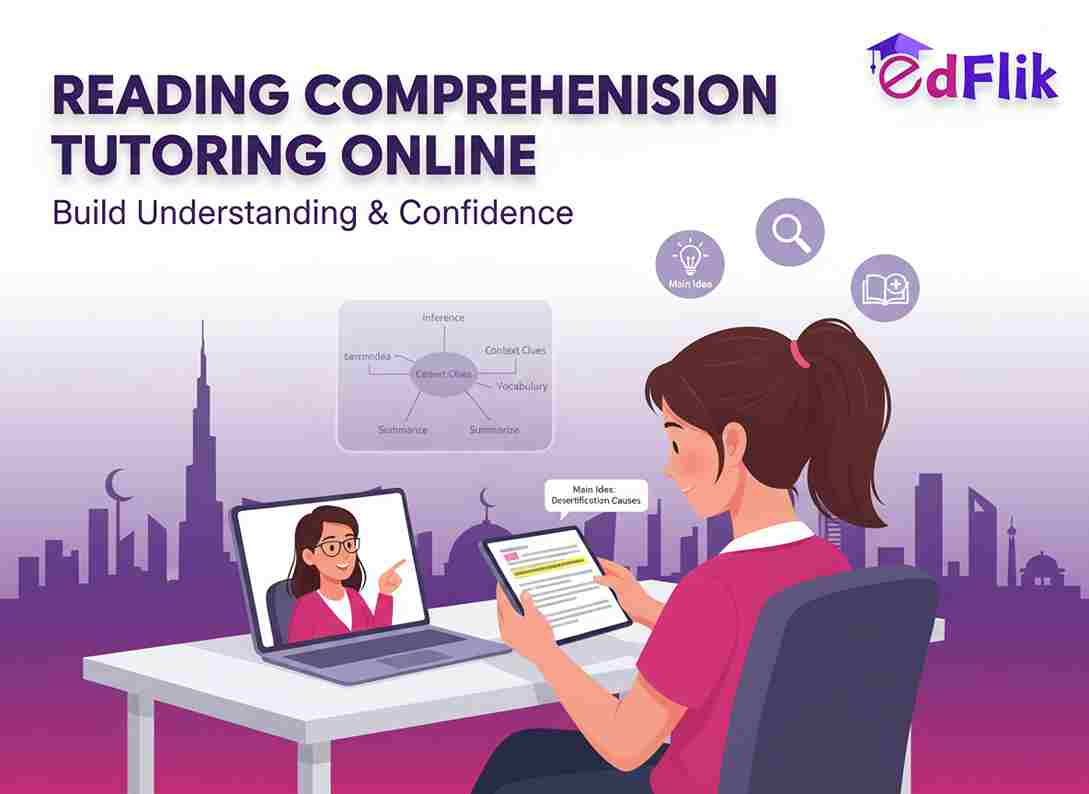
Many children can “read the words” but still struggle to understand what they read. That’s why reading comprehension is one of the most common reasons parents look for reading comprehension tutoring online. When comprehension is weak, students lose marks not only in English—but also in Science, Social Studies, and even Math word problems, because they can’t interpret questions correctly.This blog explains why students struggle with comprehension, what effective tutoring should include, how to choose the right tutor, and how parents can track progress in a simple, measurable way.
What Reading Comprehension Really Means
Reading comprehension is the ability to:
- understand the main idea and key details
- explain meaning in your own words
- make inferences (read between the lines)
- understand vocabulary from context
- answer questions with evidence from the text
So if a child reads fluently but can’t answer questions correctly, the issue is usually comprehension—not reading speed.
Signs Your Child Needs Reading Comprehension Support
Parents usually notice:
- the child reads but can’t summarise
- answers are random guesses
- struggles with “why/how” questions
- difficulty finding evidence in the passage
- weak vocabulary and misunderstanding of words
- slow reading during exams and poor time management
What Effective Reading Comprehension Tutoring Should Include
1) A baseline check (so the tutor targets the right skill)
A good tutor checks:
- reading fluency level
- vocabulary level
- comprehension type weakness (main idea, inference, detail, tone)
- ability to answer in complete sentences
2) Strategy training (not only practice)
A strong tutor teaches repeatable strategies like:
- how to preview headings and questions
- how to highlight key information
- how to identify main idea vs supporting details
- how to answer using “text evidence”
- how to eliminate wrong options in MCQs
3) Vocabulary building through context
Tutoring should include:
- learning words from the passage
- using them in sentences
- understanding meaning through context clues
4) Regular practice + feedback
Improvement happens when the student:
- practises weekly passages
- gets corrections on answers
- learns from mistakes (so the same errors don’t repeat)
Reading Comprehension by Grade Level (What Changes)
Primary (Grades 1–5)
Focus on:
- understanding simple stories and information texts
- sequencing events
- identifying characters, setting, and main idea
- building vocabulary and confidence
Middle School (Grades 6–8)
Focus on:
- inference questions
- summarising paragraphs
- identifying tone and purpose
- comparing ideas across paragraphs
High School (Grades 9–12)
Focus on:
- deeper inference and author’s intent
- analysing arguments and evidence
- time management for long passages
- writing strong evidence-based answers
How Parents Can Track Progress (Simple + Measurable)
You should see:
- better accuracy in comprehension questions
- improved ability to summarise clearly
- stronger vocabulary usage
- faster reading with understanding
- improved exam performance and confidence
Many students show visible improvement within 4–8 weeks with consistent strategy practice and feedback.
How EdFlik Supports Reading Comprehension Improvement
EdFlik supports students with:
- 1:1 live online reading comprehension tutoring
- strategy-based learning (main idea, inference, vocabulary, evidence)
- regular practice passages + corrections
- confidence building and exam-focused support
- flexible scheduling for UAE/GCC students
Share your child’s grade + current challenge, and we’ll suggest a simple weekly plan.
FAQs:-
1) My child reads fluently but doesn’t understand—why?
Fluency is different from comprehension. Many children can read aloud but struggle with meaning, inference, and vocabulary.
2) How many sessions per week are best for comprehension tutoring?
Most students improve with 2 sessions per week, plus short reading practice on non-class days.
3) Can online tutoring improve comprehension?
Yes—online tutoring works well when it teaches strategies and includes regular practice with feedback.
4) How soon can we see improvement?
Many students improve within 4–8 weeks, especially in accuracy, summarising, and confidence.
5) What can parents do at home to support comprehension?
Encourage daily reading, ask the child to summarise in 2–3 sentences, and discuss new words from the text.
Contact Details (copy-paste)
- WhatsApp: +91 88788 96600
- Email: support@edflik.com
- Website: https://www.edflik.com