What Should You Look for in an American Curriculum English Tutor?
English is about much more than spelling and grammar. For students following the American curriculum, it includes close reading of texts, clear written arguments, vivid narratives and the ability to explain what a writer means. Parents often notice that their child can read a book happily but struggles to explain it, or writes ideas in their head that never quite reach the page. Finding the right support can make a real difference to confidence and to school results.
This guide is for parents in the UAE who are searching for an American curriculum English tutor online. It explains what to look for in reading and writing support, how feedback should work and how to make a choice that suits your child. As always, please check the current standards or course guide used by your child's school, because expectations can vary by state, school and year group.
Reading Is More Than Finishing a Book
American curriculum English places strong emphasis on close reading. Students are asked to find evidence in a text, explain how an author builds an argument, and compare two sources. These skills show up in class discussions, reading tests and written responses. A child who reads quickly but cannot point to the lines that support an answer may need help with this specific skill.
A good reading lesson does not simply test whether a child has understood a story. It asks questions that send the student back into the text. Why did the character make that choice? Which word tells us how the narrator feels? What is the main idea, and which details support it? Over time, these questions build a habit of reading carefully, which helps across every subject.
Writing That Makes Its Point
Writing is often where confidence is tested. Students following the American curriculum are commonly asked to write narratives, informative or explanatory texts, and arguments that take a clear position. Each type has its own structure, and each needs practice with planning, drafting and revising.
The most useful writing feedback is specific. Instead of "good job" or "needs more detail," a helpful comment might say, "Your opening sentence introduces the topic clearly. In the second paragraph, add one example that supports your claim." Students learn faster when they know exactly what to do next. Look for a tutor who explains how feedback is given and who encourages the student to revise rather than simply correcting errors.
Parents can help by reading the work together and asking, "Which sentence are you most proud of?" and "Where could a reader get lost?" These questions keep the focus on communication, not perfection.
Vocabulary and Grammar in Context
Grammar and vocabulary are easier to learn when they are connected to real writing and reading. Rather than memorising lists of rules, a student can learn how a comma changes meaning in a sentence, or how a word like "consequently" signals a cause and effect. Good tutors weave these points into reading and writing tasks so that the learning feels practical.
For younger children, this may involve playful word games, retelling stories with new vocabulary and reading aloud. For older students, it may involve analysing a writer's word choice in a passage or revising a paragraph to make the sentence structure more varied. Either way, the aim is the same: help your child use language with confidence.
A Practical Checklist for Parents
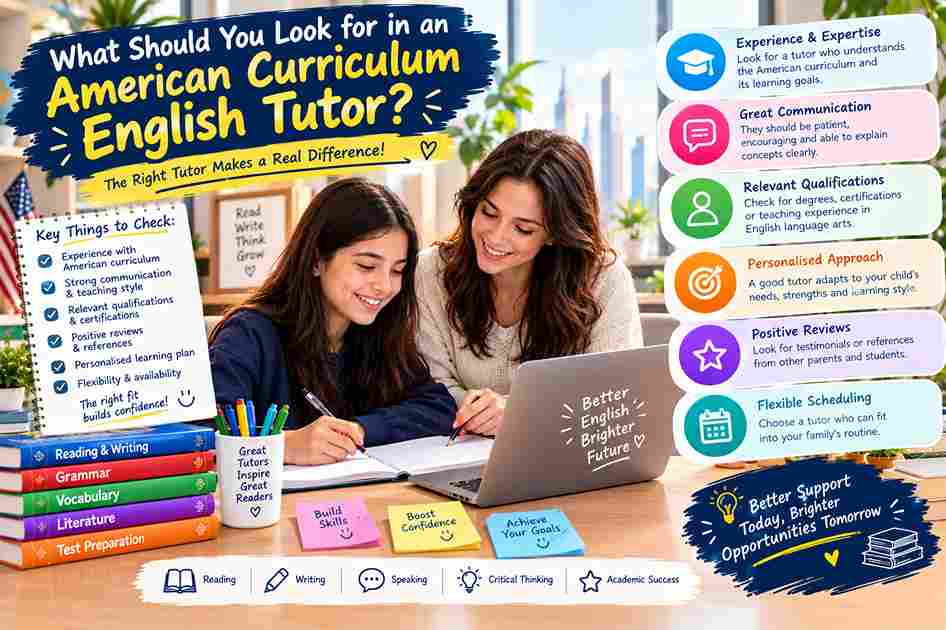
When you are comparing tutors, use these questions as a guide:
- Ask whether reading and writing are both included, or whether the focus is only on one.
- Ask which grade level the tutor usually works with and how they match lessons to your child's current year group.
- Ask how written work is reviewed and whether your child will receive specific, actionable comments.
- Ask how the tutor balances reading comprehension, writing and grammar in a single lesson.
- Request a free trial class to see how the tutor talks with your child about a text.
- Check that lessons are one-to-one, so the pace and focus can be adjusted to your child.
- Set a realistic goal for the term, such as one piece of writing revised each week.
How EdFlik Can Help
EdFlik offers live, one-to-one online English tutoring for students aged 3 to 18, including support for American curriculum reading and writing. Lessons are about one hour long and are built around your child's current texts, writing tasks and goals. Working one-to-one means the feedback, pace and focus can match your child's stage and confidence.
Classes start from AED 45 per class. Parents receive monthly progress reports, so you can see how reading, writing and vocabulary are developing over time. Free trial classes let your child try a tutor and see whether the teaching style feels right before you decide.
If you would like to explore American curriculum English support, book a free trial at www.edflik.com or email support@edflik.com. Tell us your child's age, year group and the skills you would most like to strengthen.
Conclusion
Strong English skills open doors across every subject, from reading a science text to writing a persuasive essay. The right tutor helps your child read closely, write with a clear purpose and revise with confidence. Look for specific feedback, a balance of reading and writing, and regular updates you can follow. Start with a free trial, see how your child engages and build a routine that feels encouraging rather than overwhelming. Small, steady steps often lead to the biggest changes.
Frequently Asked Questions
Are reading and writing both covered?
Yes, American curriculum English support can include both reading comprehension and writing. Many lessons combine the two, so your child practises finding evidence in a text and then uses that evidence in their own writing. Let the tutor know which skill matters most to you.
Which grade levels are supported?
EdFlik teaches students aged 3 to 18, so support is available across a wide range of year groups. Your tutor will assess your child's current level during the trial and plan lessons around their grade, school materials and goals.
How is writing feedback given?
Feedback is given one-to-one and focuses on specific, practical steps. Instead of general praise, your child receives clear suggestions for improving structure, evidence and sentence control. Students are encouraged to revise their work, which helps them see progress in their own writing.
What does a free trial include?
A free trial class lets your child meet a tutor, share their current reading or writing goals and experience a lesson. It is a no-pressure chance to judge the teaching style. You can ask questions afterwards, and our team can help if you decide to continue.
How do I choose between tutors?
Ask each tutor how they check understanding, how they give written feedback and how they keep parents informed. Notice whether your child feels comfortable and whether the tutor adapts to their pace. Trial classes make these comparisons much easier.
More on American Curriculum, SAT & AP