Choosing the Right IGCSE and A-Level Subjects for Engineering and Computer Science Degrees
Last Updated: October 2026 | By EdFlik Education Team
For ambitious high school students and parents planning ahead in Dubai, Abu Dhabi, and international schools worldwide, the journey toward a top-tier university degree in Engineering or Computer Science begins long before university applications. It starts the moment you select your Cambridge or Edexcel IGCSE (or GCSE) options and carries critical weight into your A-Level subject choices.
Admission tutors at world-class engineering institutions—such as Imperial College London, Cambridge, MIT, NUS, or top-ranked Russell Group universities—have extremely strict prerequisite requirements. Choosing the wrong combination of subjects at age 14 or 16 can inadvertently lock you out of premier STEM programs, regardless of how high your final grades are.
In this comprehensive masterclass guide, our expert academic advisors break down the essential subject pathways, prerequisite matrices, and strategic combinations needed to secure admission to the world's most competitive Engineering and Computer Science degree courses.
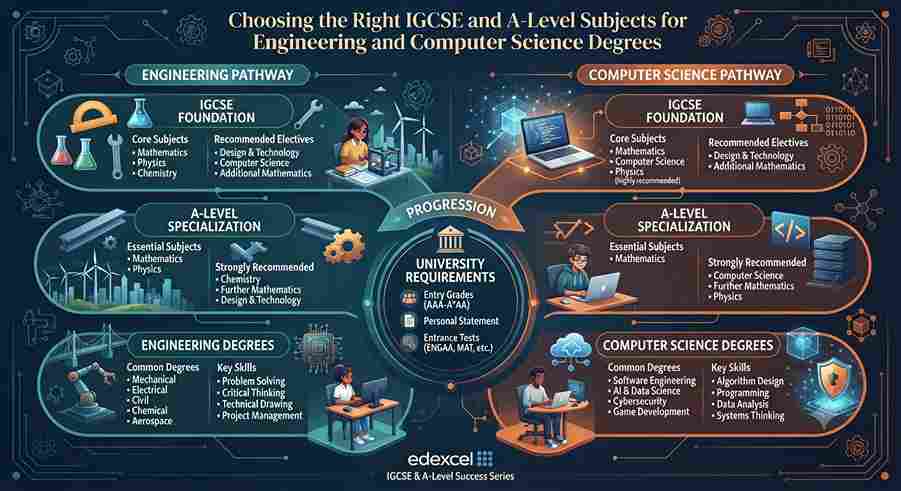
Part 1: The Foundation Years — IGCSE Subject Strategy
While university admissions officers primarily evaluate your A-Level (or IB/AP) results, your IGCSE choices lay the quantitative foundation and demonstrate your academic breadth. Furthermore, top universities look closely at your IGCSE grades in core subjects as part of their holistic screening process.
Essential IGCSE Core Requirements:
- Mathematics (Extended / 0580 or 0606 Additional Math):An absolute non-negotiable. Securing a top grade (A* or 9) in IGCSE Mathematics is mandatory. If your school offers Cambridge International Mathematics (0607) or Additional Mathematics (0606), taking Add Math is highly recommended as a bridge to A-Level Mathematics.
- The Sciences (Physics and Chemistry):Whether you take Co-ordinated Sciences (Double Award) or Separate Sciences (Triple Award: Physics, Chemistry, Biology), Physics is vital for all engineering branches (Mechanical, Electrical, Civil, Aerospace). Chemistry is equally critical for Chemical Engineering, Biomedical Engineering, and Materials Science.
- English Language:Universities in the UK, US, UAE, and Canada require proof of strong written and verbal communication skills. A strong grade in IGCSE English Language or Literature ensures you meet English proficiency thresholds without needing extra IELTS or TOEFL exams.
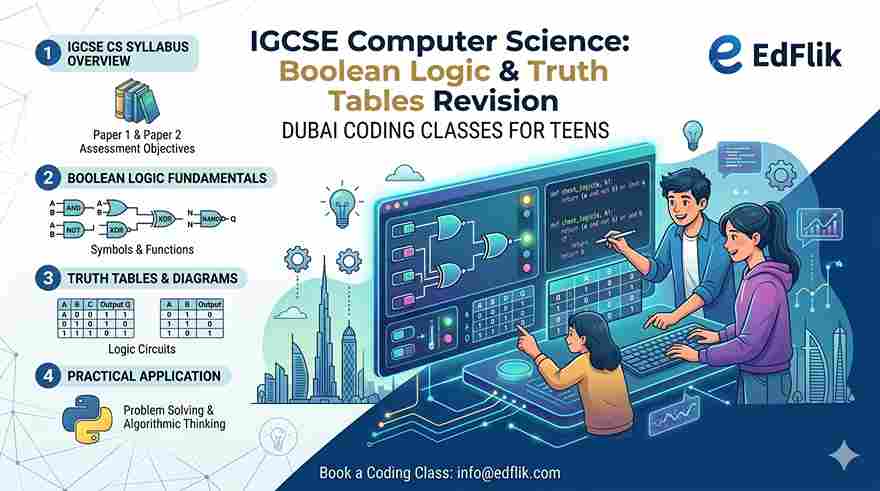
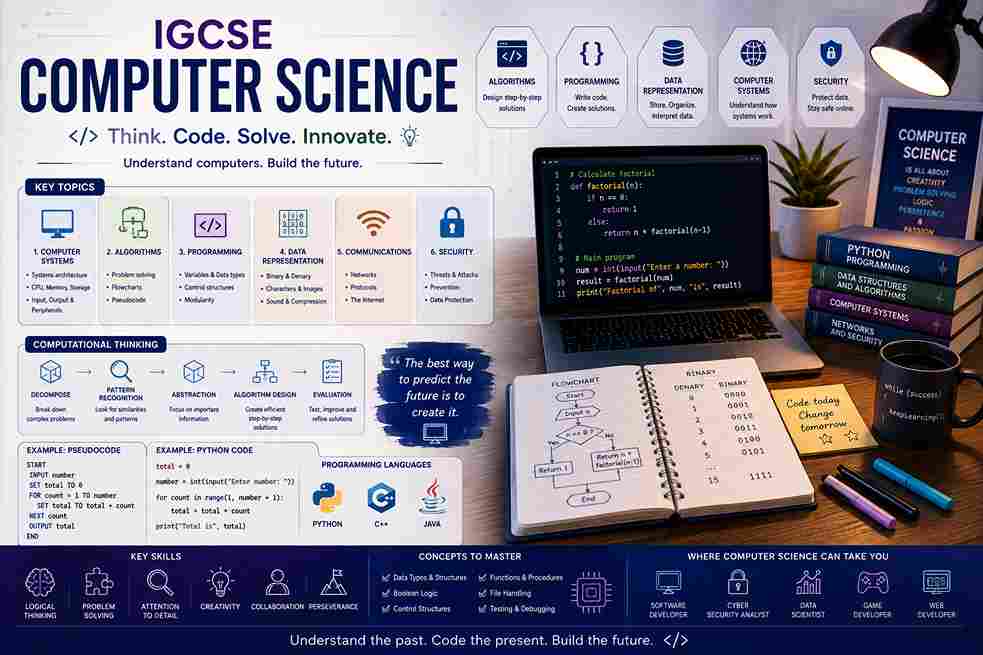
- Computer Science (0478):While not always a strict prerequisite for studying Computer Science at university level (as many universities teach programming from scratch), taking IGCSE Computer Science provides invaluable computational thinking, algorithm logic, and Python/pseudocode literacy.
Part 2: The A-Level Prerequisite Matrix for Engineering
Engineering is a broad umbrella encompassing Mechanical, Electrical, Civil, Chemical, Aerospace, and Mechatronics. To keep all options open for top-tier engineering faculties, your A-Level combination must prioritize rigorous quantitative subjects.
The "Golden Triangle" for Engineering:
- A-Level Mathematics: Mandatory for 100% of engineering programs globally. You cannot study engineering at university without strong calculus and algebra foundations.
- A-Level Physics: Mandatory or strongly recommended for almost all engineering disciplines. Mechanics and electricity modules form the bedrock of engineering design.
- A-Level Chemistry (or Further Mathematics / Computer Science):
- Chemistry is essential if you are eyeing Chemical Engineering, Petroleum Engineering, or Biomedical Engineering.
- Further Mathematics is highly advantageous (and practically expected by top-tier universities like Oxford, Cambridge, and Imperial) if you are applying for Electrical, Mechanical, or Aeronautical Engineering.
Recommended A-Level Subject Combinations by Engineering Branch:
- Mechanical / Aerospace Engineering: Math, Further Math, Physics, (Plus Chemistry or Design & Technology).
- Electrical / Electronic Engineering & Computer Hardware: Math, Further Math, Physics, Computer Science.
- Chemical Engineering: Chemistry, Math, Physics, (Plus Biology or Economics).
- Civil Engineering: Math, Physics, Chemistry or Design & Technology, (Plus Geography or Economics).
Part 3: A-Level Subject Strategy for Computer Science Degrees
The misconception that you need to know how to code in five languages to study Computer Science at university stops many students short. In reality, university admission boards care far more about your pure mathematical reasoning and logic than your ability to write syntax.
Essential A-Level Subjects for Computer Science:
- A-Level Mathematics: The absolute core requirement. Topics like matrices, vectors, discrete mathematics, and calculus are deeply intertwined with algorithms, machine learning, and cryptography. Many top universities require an A* in A-Level Math.
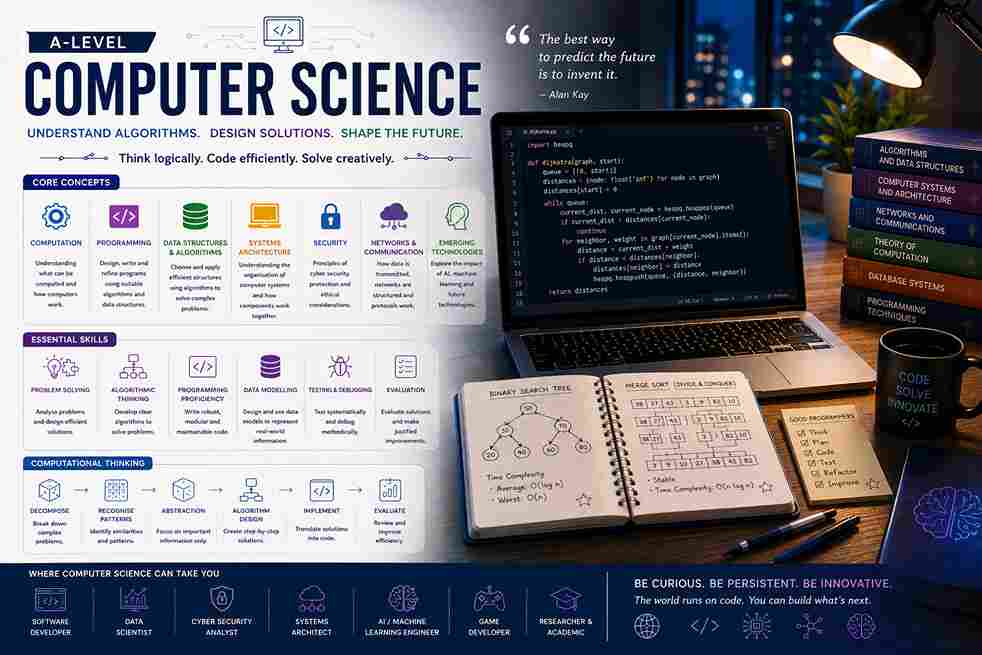
- A-Level Computer Science: Highly beneficial. It introduces you to computational thinking, database structures, boolean algebra, hardware architecture, and software development lifecycles.
- A-Level Further Mathematics: The ultimate differentiator. If you want to study Computer Science at elite institutions (e.g., Cambridge, Imperial, UCL, Carnegie Mellon), Further Mathematics dramatically strengthens your application by proving your ability to handle abstract, advanced mathematical proofs.
- A Third Science or Analytical Subject (Physics, Chemistry, Economics, or Psychology): Demonstrates scientific method or quantitative literacy.
Part 4: Top 4 Traps That Limit University Options
- Dropping Math Too Early (or Avoiding Further Math): Choosing "Standard" Math when aiming for competitive engineering or computer science degrees at top global universities. For elite Russell Group or Ivy-Plus institutions, Further Math is often an unwritten prerequisite.
- Assuming Computer Science A-Level is Mandatory: Choosing to avoid Computer Science at A-Level because your school doesn't offer it, worrying it will hurt your application. Correction: Universities know not all schools offer CS A-Level; they care far more that you have Mathematics and Physics. You can learn programming independently; mathematical maturity cannot be faked.
- Picking "Soft" A-Levels: Combining Math and Physics with essay-heavy or creative subjects that lack quantitative rigor (e.g., Media Studies or Travel & Tourism). Elite STEM admissions officers look for academic grit across rigorous analytical disciplines.
- Failing to Check International University Entry Requirements: For example, applying to engineering programs in Europe or North America that might require specific lab-based science combinations (like both Physics and Chemistry) rather than just Math and Computing.
Planning your IGCSE or A-Level subject pathways, or preparing for university admissions? EdFlik connects international school students globally with expert, 1-to-1 online tutors across Mathematics, Physics, Chemistry, and Computer Science, helping you achieve top grades and build standout university portfolios.Book a Free Demo Class Today!
Frequently Asked Questions (FAQs)
Q1: Is Further Mathematics compulsory for studying Computer Science at university?
Ans: It is not formally compulsory for most universities, but for top-tier institutions (such as Cambridge, Oxford, or Imperial), it is heavily advantageous and practically expected. If your school offers Further Math and you are aiming for elite programs, you should strongly consider taking it.
Q2: Can I study Engineering without A-Level Physics?
Ans: In almost all cases, no. Physics is the foundational science of engineering. Without A-Level Physics, you will not meet the entry requirements for Mechanical, Electrical, Civil, or Aeronautical Engineering degree programs.
Q3: Does university admissions care whether I take Cambridge or Edexcel IGCSEs?
Ans: No. Both Cambridge Assessment International Education (CAIE) and Pearson Edexcel are internationally recognized examining boards of equal academic rigor. Universities treat them identically; what matters is achieving top grades (A*/9).
Q4: How does EdFlik support students targeting STEM university degrees?
Ans: EdFlik connects international school students worldwide with vetted, expert 1-to-1 online tutors specializing in IGCSE, A-Level, IB, and AP STEM curricula. Our personalized sessions focus on mastering complex mathematical proofs, advanced physics mechanics, coding logic, and rigorous exam preparation.