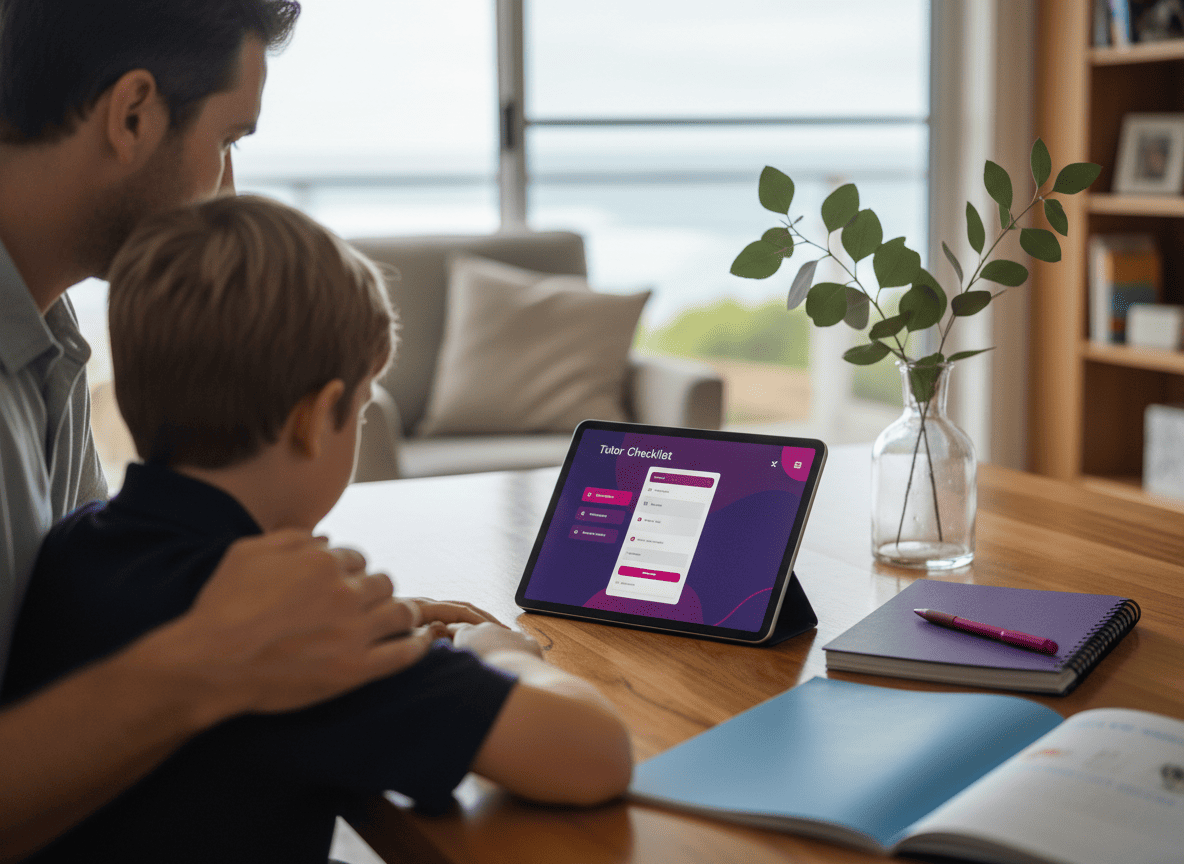
How Parents Can Support Online Tutoring in UAE 2026 — A Practical Guide to Getting the Best Results

Online tutoring works significantly better when parents understand their role in making it work. The most effective online tutoring arrangements are not purely transactional (child attends session, parent pays the invoice) — they involve active but appropriate parental engagement at the setup, monitoring, and between-session practice stages. This guide gives UAE parents the practical framework for maximising what they are investing in.
The Parent Role in Online Tutoring — What Actually Matters
Parents of children in online tutoring have three distinct responsibilities that most significantly affect outcomes:
|
Responsibility |
What It Looks
Like in Practice |
Common
Failure Mode |
|
Environment
and setup |
Ensuring the
child has a consistent, quiet location, a working device with camera on,
stable Wi-Fi, and necessary materials before every session — not scrambling 5
minutes before the session starts |
Allowing the
child to join sessions from the bedroom with the camera off, on a phone
rather than a laptop, with notifications active and other family members
creating background noise |
|
Between-session
practice |
Ensuring that
any practice work set by the tutor between sessions is completed before the
next session — the tutor cannot build on work that was not done |
Allowing the
child to attend every session but do no practice between sessions — this
halves the effective value of every hour of tutoring |
|
Feedback
review |
Reading the
post-session feedback the tutor provides and having a brief check-in with the
child about what was covered — not interrogating, but maintaining awareness |
Not reading
tutor feedback and therefore not knowing what gaps are being worked on or
what practice was set |
|
Research on
tutoring effectiveness consistently shows that 1 hour of tutoring per week
combined with 20-30 minutes of daily practice produces twice the grade
improvement of 2 hours of tutoring per week with no between-session practice.
Between-session practice is more important than session frequency — and it is
the parent's responsibility to ensure it happens for younger students. |
Before the First Session — Setting Up for Success
Choosing the Right Starting Point
The most useful thing a parent can do before the first tutoring session is gather specific evidence of where the child is struggling — not a general description ("they're finding Maths hard") but specific evidence: the most recent marked test or exam paper with teacher comments; any specific teacher feedback about the subject; and the child's own view of which topics or question types they find most difficult. The more specific the starting information, the faster the tutor can identify the real gap.
Preparing the Child for the First Session
Online tutoring works best when the child approaches it actively rather than passively. For younger children who may be reluctant, framing tutoring as "working with someone who can explain things in a different way" rather than as remediation for failure sets a better psychological context. For older students (Year 10 and above), the most effective framing is practical: "These sessions will specifically close the gap that is stopping you reaching the grade you need." Students who understand the purpose of the sessions engage more actively.
During Sessions — What Appropriate Involvement Looks Like
During online tutoring sessions, parents should:
• Not be present in the room unless the child is very young (under 7) or has requested parental presence — a child who knows a parent is observing often becomes self-conscious and less likely to engage naturally with the tutor or ask questions they fear might seem "dumb"
• Not interrupt the session to pass on additional instructions to the tutor — note these and communicate them between sessions via message or email
• Ensure the session space is quiet for the full duration — other family members, televisions, and domestic noise all reduce concentration and audio quality
Between Sessions — The Practice Responsibility
Between-session practice is where most of the actual grade improvement occurs. What effective between-session practice looks like for different year groups:
|
Year Group |
Recommended
Practice |
Parent's Role |
|
Year 3-6
(Primary) |
Daily practice
of the specific skill practiced in the session: 10-15 min on the target times
table or phonics pattern or reading passage set by the tutor |
Active
involvement: sit with the child for some practice sessions; ensure the
practice is done daily; report to the tutor if it is not happening |
|
Year 7-9 (KS3) |
20-30 min of
structured practice: completing the set exercises from the session or
practising the target topic with new examples |
Check that
practice is being done without doing it with the child; flag to tutor if
specific topics are generating consistent difficulty at home |
|
Year 10-11
(IGCSE) |
45-60 min of
past paper questions on the topics covered, marked against mark scheme: this
is what the tutor should be setting after each session |
Ensure the
student is completing and self-marking the practice — not just doing the
questions and moving on without reviewing mark scheme answers |
|
Year 12-13
(A-Level / IB) |
1-2 hours of
subject-specific past paper practice plus essay or extended response writing
where relevant |
Lighter touch
— A-Level and IB students should be managing their own study schedules;
parent ensures time and space are protected |
Monitoring Progress — How to Know if Tutoring Is Working
After 6-8 sessions (approximately 6-8 weeks at one session per week), parents should see specific, measurable progress indicators:
• Past paper scores improving on the topics that have been covered in tutoring — the tutor should be setting these and reporting scores back to parents
• The student can answer question types they previously could not — a specific demonstrable skill, not just a general sense of increased confidence
• School test results in the tutored subject improving — this is the most objective external validation of tutoring progress
• The student is more positive about the subject — increased confidence and reduced anxiety are precursors to grade improvement, not just consequences of it
If none of these indicators are visible after 8 sessions, the conversation to have is with the tutor: Has the diagnostic been accurate? Is the practice between sessions happening? Should the subject focus, topic focus, or approach change? A good tutor will welcome this review and adjust accordingly.
|
EdFlik
provides post-session written feedback to parents after every session
covering what was covered, what gaps were identified, and what practice is
set for the week. Free diagnostic first session. Book at www.edflik.com or
WhatsApp +91 88788 96600. |
Frequently Asked Questions
Q: How can parents help their child get more from online tutoring sessions?
Four actions: ensure a consistent distraction-free environment; brief the tutor specifically before the first session using recent school feedback; review post-session tutor feedback after each session; ensure between-session practice actually happens.
Q: How often should my child have online tutoring sessions?
1-2 sessions per week for ongoing improvement; 2-3 per week for intensive pre-exam preparation; daily sessions appropriate only in the final 2-3 weeks before exams for critical subjects.
Q: What should the first tutoring session focus on?
A diagnostic assessment — 15-20 minutes of targeted questions to identify exactly where the knowledge and technique gaps are. Families who provide marked school tests or mock papers in advance give the tutor the best diagnostic starting point.
Q: How do I know if the online tutoring is working?
After 6-8 sessions: past paper scores improving on covered topics; the student can answer question types they previously could not; school test results improving; the student more positive about the subject.
Q: What equipment does my child need for online tutoring in UAE?
Laptop or tablet (preferred over phone), working camera and microphone, stable Wi-Fi, notebook and pen, and access to the relevant textbooks and past papers. Camera must be on for all sessions.