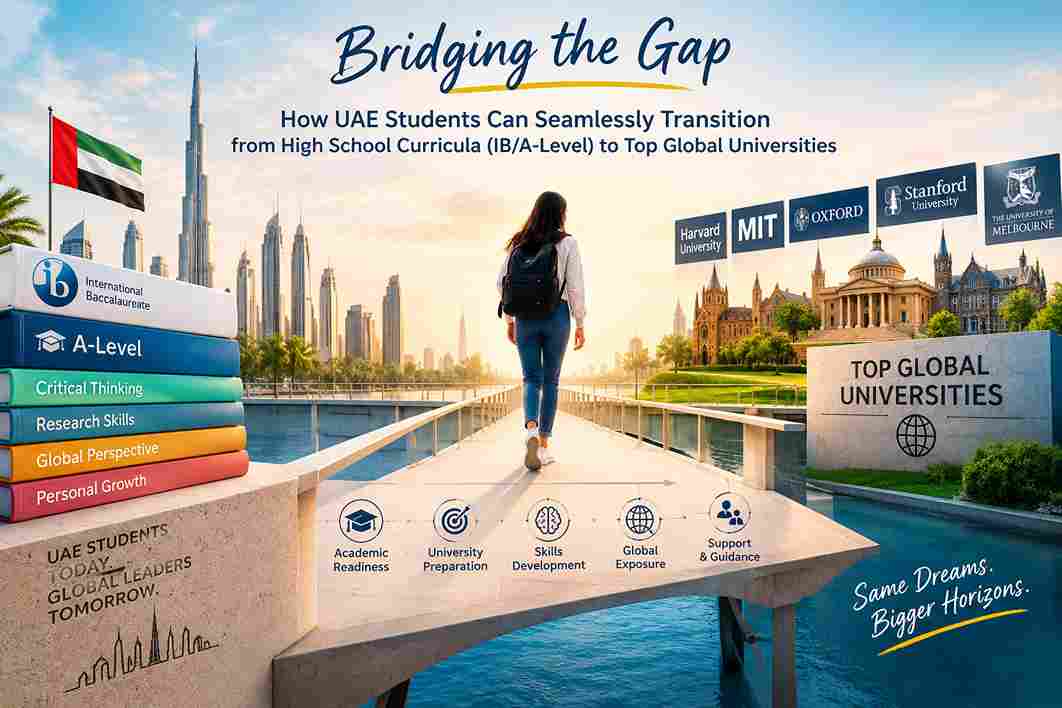
Bridging the Gap: How UAE Students Can Seamlessly Transition from High School Curricula (IB/A-Level) to Top Global Universities
Last Updated: September 2026 | By EdFlik Education Team
For ambitious students across international schools in the UAE—whether studying in Dubai, Abu Dhabi, or Sharjah—completing a rigorous high school curriculum like the International Baccalaureate (IB) Diploma Programme or Pearson Edexcel/Cambridge International A-Levels is a major milestone. These globally recognized qualifications open doors to elite universities across the UK, US, Canada, Europe, and Australia.
However, the leap from a structured high-school classroom to independent, research-driven higher education is substantial. Many high-achieving UAE students find themselves facing culture shocks, academic adjustments, and time-management hurdles during their first year abroad.
In this comprehensive guide, our expert university admissions and curriculum advisors break down the academic, operational, and psychological shifts required to make a smooth transition from UAE international schools to top-tier global universities.
Part 1: Decoding the Academic Shift (IB/A-Levels vs. University)
While IB and A-Levels are renowned for academic rigor, the structural format of learning changes dramatically at university:
- From Guided Study to Autonomous Learning: In high school, teachers guide your daily homework, schedule frequent check-ins, and provide structured revision sheets. At university, lecture-and-seminar formats mean you might only have 12 to 15 contact hours a week, with the expectation that you spend 25+ hours in independent library research.
- Assessment Depth Over Breadth: Instead of multiple modular tests throughout the year, university grades often hinge on two or three high-stakes assignments (major essays, lab reports, or final examinations) where independent critical thinking outweighs rote memorization.
- Diverse Global Cohorts: UAE international schools are multicultural, but stepping onto a campus in London, Boston, or Toronto introduces you to entirely new academic styles, grading rubrics, and peer expectations.
Part 2: Step-by-Step Transition Blueprint for UAE Students
Step 1: Maximize Your Final High School Year (IB/A-Levels)
- Don't Coast After Conditional Offers: Once you secure your university conditional offer based on predicted grades, do not let your study habits slip. The discipline required to study for final May/June exams directly mimics university finals preparation.
- Sharpen Independent Research Skills: Use your IB Extended Essay (EE) or A-Level independent coursework as a training ground for university-level academic writing, referencing, and database navigation.
Step 2: Master Academic Writing and Referencing Early
Many first-year university students lose marks simply due to improper referencing or narrative essay styles.
- Familiarize yourself with citation styles (Harvard, APA, MLA, or Chicago) before arriving on campus.
- Practice writing concise, evidence-backed arguments rather than fluffing word counts.
Step 3: Develop Proactive Time Management
Without parents or teachers reminding you about deadlines, university life requires strict personal organization.
- Adopt digital productivity tools (Notion, Google Calendar, Todoist) to map out your semester syllabus, reading lists, and essay deadlines weeks in advance.
Step 4: Build a Support Network Abroad
- Moving from the UAE's warm, family-oriented lifestyle to an independent living situation can be daunting. Join student societies, cultural clubs, and university sports teams during your first week (Fresher's Week) to build a solid community.
Part 3: Top 4 Strategies to Thrive in Your First Year Abroad
- Utilize University Writing Centers and Office Hours: Every top global university offers free academic writing support and professor office hours. Don't wait until you fail an assignment to seek help; consult your professors early.
- Learn How to Read Smart, Not Hard: University reading lists are notoriously extensive. Master the skill of academic skimming—identifying abstracts, subheadings, and conclusions rather than reading every textbook cover-to-cover.
- Manage Financial Independence: For many UAE students, living abroad is their first time managing a personal budget, grocery shopping, and paying utility bills. Set up a transparent budgeting app early.
- Stay Connected While Embracing Independence: Keep in touch with family back in the UAE, but actively immerse yourself in your new university environment to beat homesickness.
Part 4: How Expert Mentorship Can Ease the Transition
Transitioning to global universities is easier when you have experienced guidance every step of the way. Whether you are finalizing your IB/A-Level exams in the UAE or preparing for university foundation courses, expert mentorship ensures you hit the ground running.
Partnering with professional educational advisors offers targeted advantages:
- Advanced Curriculum Prep: Previewing first-year university modules (such as university-level calculus, economics, or scientific research methods) during the summer before departure.
- Application & Interview Strategy: Refining personal statements, UCAS applications, and university interview techniques.
- Academic Confidence: Bridging knowledge gaps so you enter your freshman year feeling fully prepared to excel.
Preparing to transition from UAE international schools to a top global university? EdFlik offers expert, 1-to-1 online tutoring and university transition mentorship customized specifically for IB and A-Level students, helping you secure top grades and thrive globally.Book a Free Demo Class Today!
Frequently Asked Questions (FAQs)
Q1: Are IB or A-Levels better for getting into top global universities?
Ans: Both the IB Diploma and A-Levels are universally respected by top universities worldwide (including the Ivy League, Oxbridge, and the Russell Group). Universities evaluate applicants based on academic rigor, predicted/final grades, and personal statements rather than favoring one curriculum over the other.
Q2: How can UAE students adjust to cultural differences when moving abroad?
Ans: Joining international student associations, attending university orientation events, and keeping an open, curious mindset help smooth the cultural transition. Most universities also offer dedicated international student support offices.
Q3: When should students start preparing for university admissions and entrance exams?
Ans: Ideally, preparation should begin during the summer before Year 12 (or IB Year 1), focusing on building strong predicted grades, exploring super-curricular activities, and preparing for admissions tests (like the UCAT, LNAT, BMAT, or SAT/ACT) where required.
Q4: How does EdFlik support UAE students heading to global universities?
Ans: EdFlik connects students across Dubai, Abu Dhabi, and the UAE with vetted, experienced 1-to-1 online tutors and mentors. Our programs cover final IB/A-Level exam preparation, university admissions guidance, and first-year academic bridge support.