Coding & Programming for Kids in GCC — From Scratch to Python: Complete Parent Guide
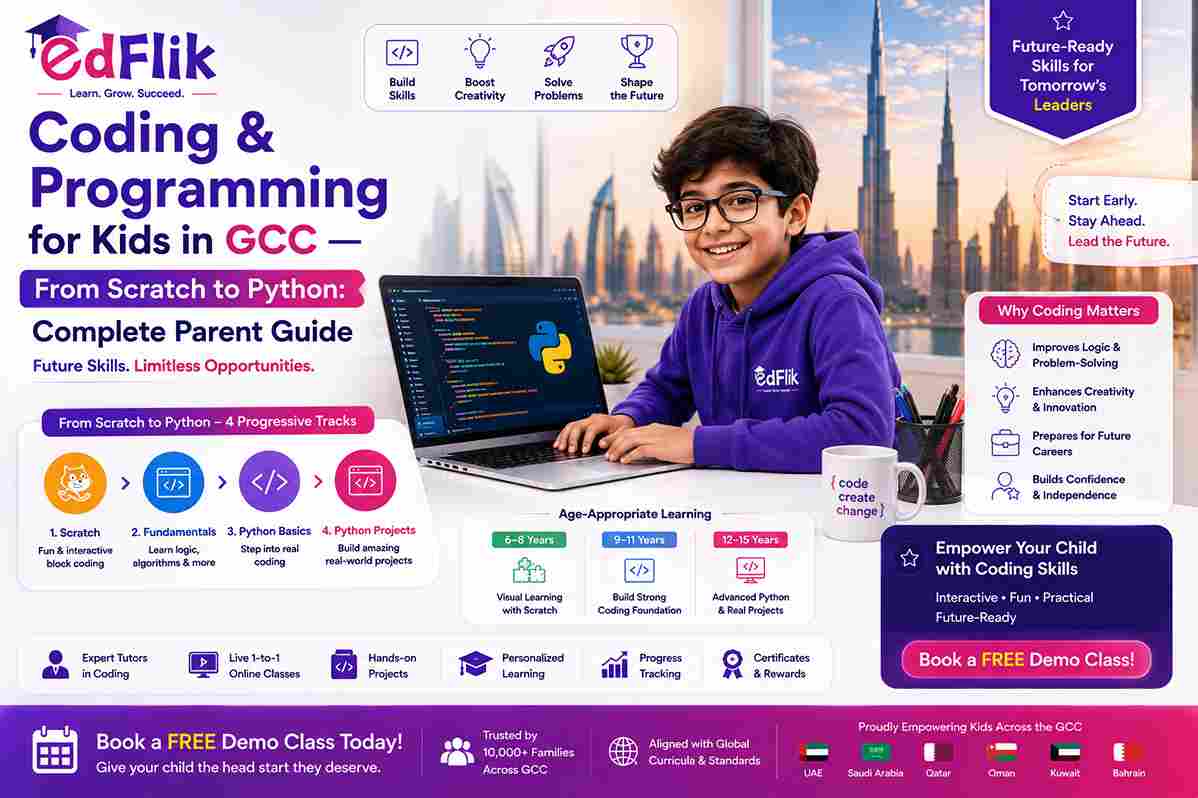
Technology is reshaping every career sector globally, and coding literacy has become as essential as reading and writing. GCC parents increasingly recognize that their children need programming skills to compete in future job markets. However, many parents lack clarity on when to start coding education, which language to learn first, how to progress through programming levels, and how to keep children motivated. This comprehensive guide addresses these questions, providing a research-backed roadmap for coding education tailored to GCC families.
Unlike generic coding guides, this guide acknowledges GCC-specific contexts: bilingual learners, diverse curricula (IB, IGCSE, AP, ICSE), time zone considerations, and the reality that coding education isn't standardized in most GCC schools. Many coding courses in the region either oversimplify (Scratch-only, game-building without foundations) or overwhelm (university-level computer science). EdFlik's approach bridges this gap, providing structured, age-appropriate coding progression with expert tutors who understand both the GCC market and pedagogical best practices.
Why Coding Matters: The Business Case for GCC Parents
The World Economic Forum's Future of Jobs Report (2023) identifies coding and AI as top in-demand skills across industries. Globally, coding professionals earn 40-60% more than non-coding peers. In the GCC, demand for tech talent exceeds local supply; many companies actively recruit international tech talent due to skills shortages. Starting your child's coding education early—ages 6-8 onward—positions them for both school success and career advantage.
Beyond career pathways, coding develops critical problem-solving, logical thinking, computational thinking, and resilience (debugging teaches persistence). These cognitive skills transfer to all subjects: mathematical reasoning, scientific methodology, even essay structure benefits from computational thinking. IB, IGCSE, and AP curricula increasingly integrate computational thinking into exam requirements. Early coding exposure builds these skills naturally rather than forcing last-minute exam prep.
Age-Based Coding Progression: The Complete Roadmap
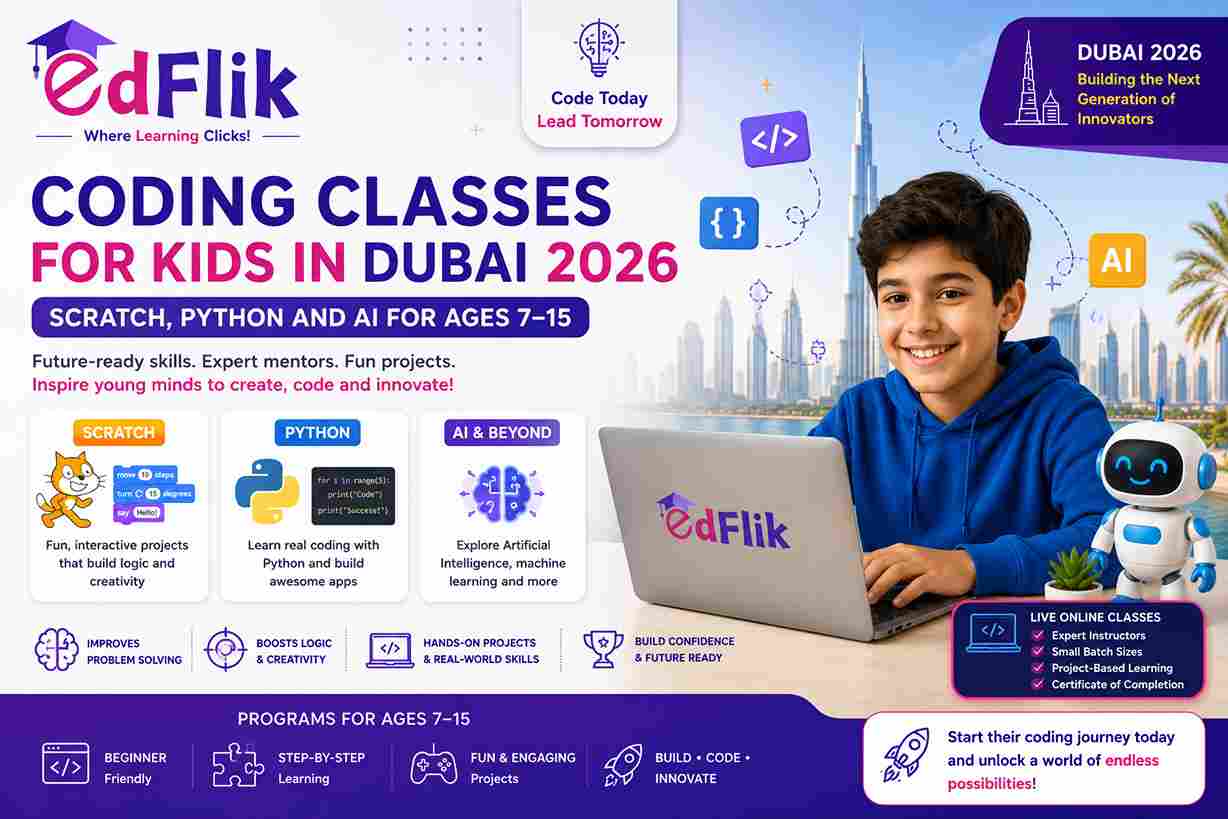
Ages 6-8: Visual Block-Based Coding (Scratch, Blockly). At this age, children are developing logical thinking and sequencing skills. Block-based languages like Scratch teach programming fundamentals without syntax barriers. Children drag and drop command blocks, seeing immediate visual results. Curriculum focus: sequencing, loops, conditionals, functions. Expected outcomes: create simple animations, games, interactive stories. Cognitive level: concrete operational (Piaget); learns through tangible, visual feedback.
Ages 8-10: Advanced Block-Based + Introduction to Text-Based. By age 8-9, children can handle simple text-based languages. Python is ideal for this age: readable syntax, immediate feedback via REPL (read-eval-print loop), strong in education globally. Curriculum: variables, data types, input/output, nested loops, functions. Real projects: text-based games, quiz programs, simple data analysis. Transition from visual to text gradually; block-based languages provide scaffolding.
Ages 11-13: Python Mastery + Web Foundations. Middle grades (grades 6-8) can tackle Python depth: object-oriented basics, file handling, debugging, algorithms. Simultaneously, introduce web development (HTML, CSS) to show real-world application. Curriculum: classes, methods, lists, dictionaries, error handling. Projects: interactive web pages, data projects, educational games. At this stage, formal coding becomes a subject; structured tutoring becomes valuable.
Ages 14-18: Specialization & Career Focus. High school students choose specialization based on interest and career trajectory. Web development (JavaScript, React), data science (Python data libraries), game development (Unity, C#), mobile apps (Swift, Kotlin). IGCSE/IB Computer Science students take structured pathways. Curriculum: design patterns, databases, APIs, agile development, project management. Real-world projects: full-stack applications, data dashboards, publishable apps.
Coding in School Curricula: Integration Across IB, IGCSE, AP
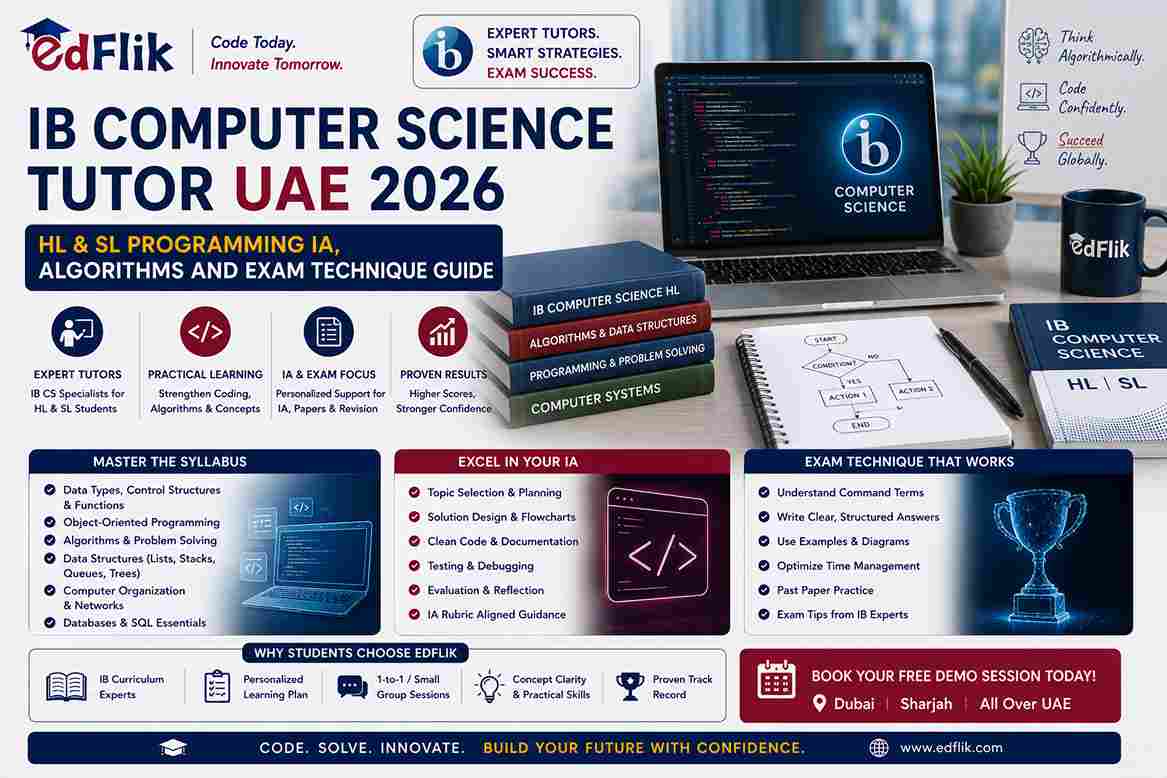
IB Computer Science: Optional subject; emphasizes algorithms, data structures, and systems design alongside programming. IB expects understanding of theory (algorithmic complexity, database design, networks) alongside implementation. EdFlik tutors teach both theory and hands-on coding, ensuring exam success and genuine understanding.
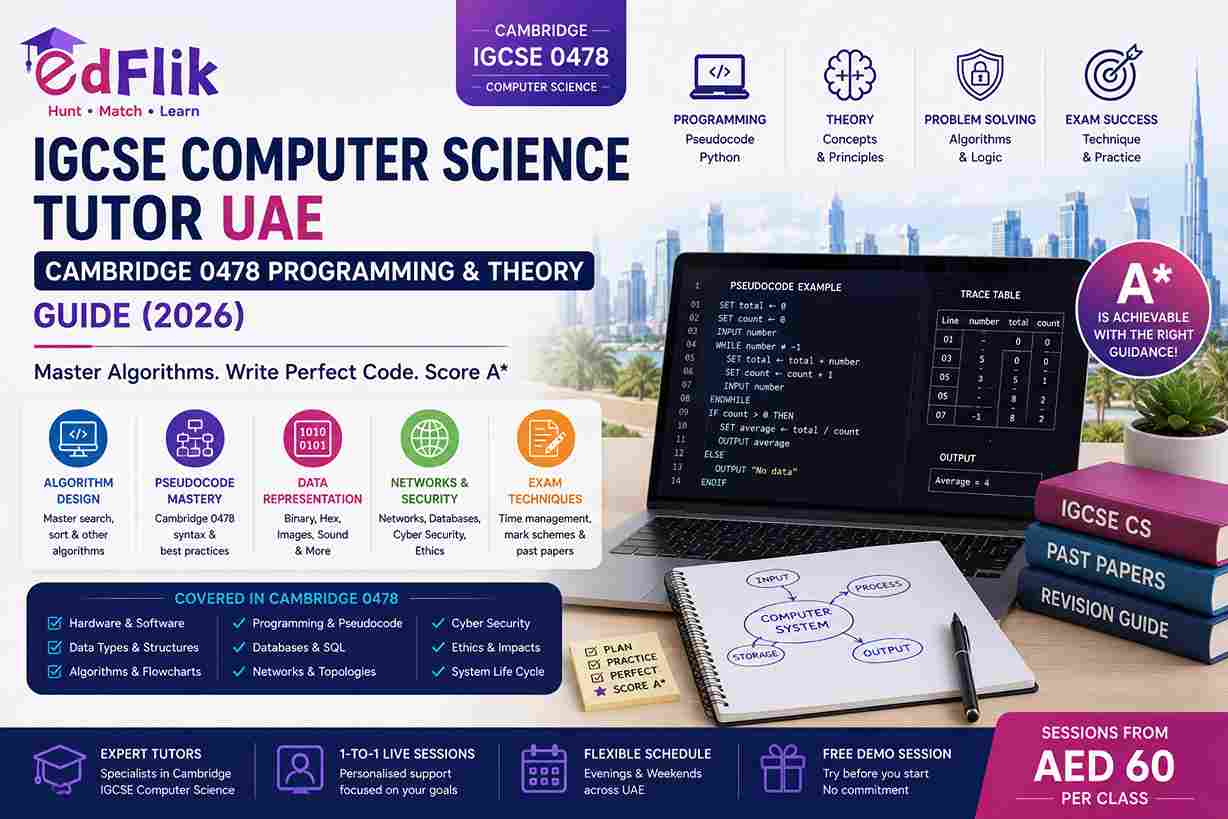
IGCSE Computer Science: Covers programming (typically pseudo-code and Python), hardware/software concepts, data representation, networks, cyber security. Programming component requires algorithm design, trace execution, and code writing. EdFlik tutors help students master algorithms and translate them into Python code aligned with exam board expectations.
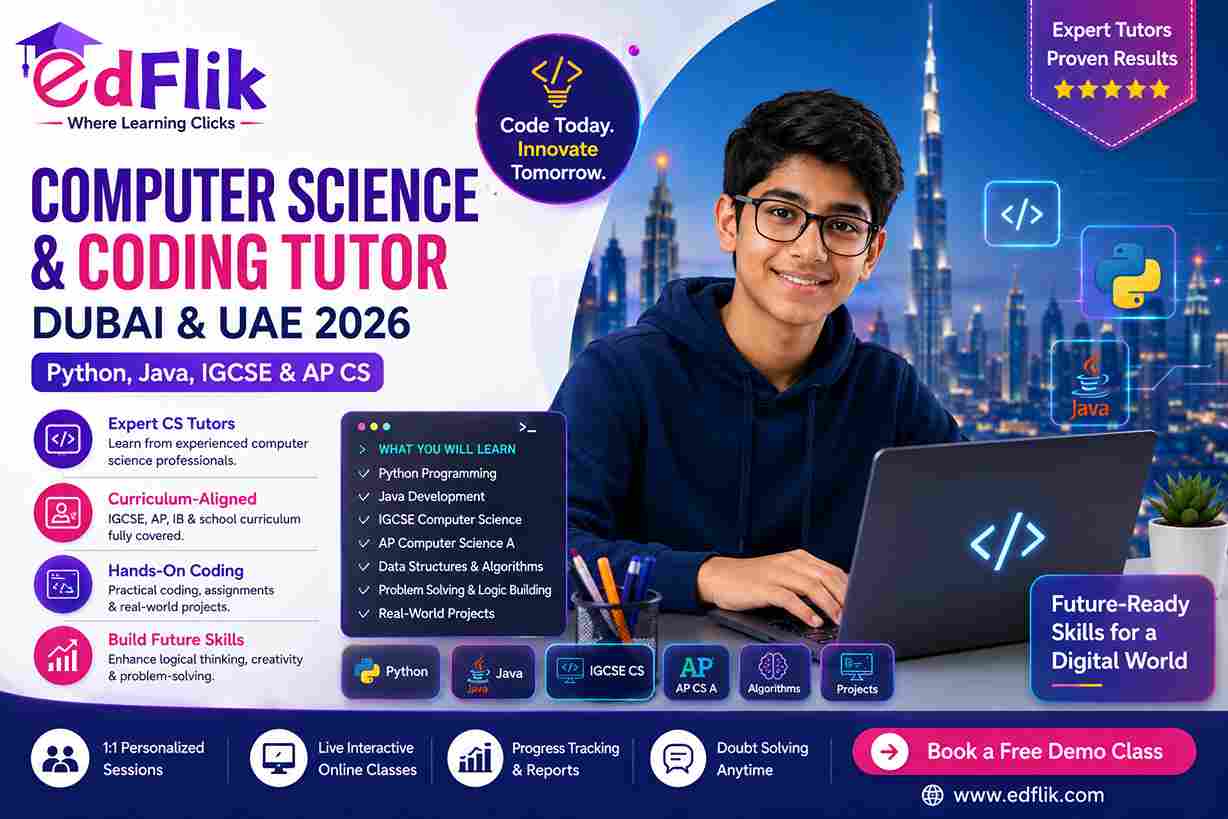
AP Computer Science Principles (CSP) and Computer Science A (CSA): CSP covers broad computing concepts, including coding through JavaScript or Python. CSA goes deeper: Java programming, object-oriented design, algorithms, data structures. EdFlik supports both pathways, scaffolding concepts from introduction to AP depth.
Common Parent Misconceptions About Coding Education
Misconception 1: 'My child needs to start very young or they'll fall behind.' Reality: Coding readiness correlates with logical thinking development (age 7-8 onward), not age alone. Children starting at age 10-12 can reach proficiency within 1-2 years if learning is structured. Early starts build foundations; late starts can still achieve excellence with focused tutoring.
Misconception 2: 'Coding is only for 'math kids' or those with tech aptitude.' Reality: Coding is taught successfully to diverse learners. Struggle with syntax doesn't indicate inability; it indicates need for scaffolding. Many 'humanities' students excel in coding because logic transcends subject silos. EdFlik tutors adapt to learning styles, making coding accessible regardless of prior background.
Misconception 3: 'My child can learn coding through free online courses (YouTube, Codecademy).' Reality: Free resources provide content, not personalization, feedback, or motivation. Many children start online courses enthusiastically, then plateau or abandon them when debugging frustration hits. 1-on-1 tutoring maintains momentum, provides debugging support, and connects concepts across projects—outcomes free courses rarely achieve.
Building Coding Confidence & Avoiding Burnout
Coding burnout often stems from frustration during debugging or from pressure to complete complex projects without foundational understanding. EdFlik tutors prevent burnout through scaffolding: start small, build success, gradually increase complexity. Celebrate debugging as learning, not failure. Connect projects to student interests (game development for gamers, web design for design-minded students) to maintain intrinsic motivation.
Frequently Asked Questions
Q1: When should my child start coding?
Age 6-8 onward with visual block-based languages (Scratch). Text-based languages (Python) at age 8-10. Formal coding study (IGCSE/IB Computer Science prep) at age 13-14. However, readiness varies; discuss your child's logical thinking and interest with an EdFlik tutor.
Q2: How much time per week is needed to progress in coding?
EdFlik typically recommends 2-3 sessions per week (1 hour each). Consistency matters more than volume. 2 sessions weekly sustained over months outperforms intensive cramming. Homework and independent projects between sessions are crucial.
Q3: My child struggles with syntax and debugging. Is coding for them?
Yes. Struggle with syntax is normal; it indicates need for scaffolding, not inability. EdFlik tutors break syntax into manageable chunks, teach debugging systematically, and connect errors to learning ('Debugging teaches problem-solving'). Most initial struggles resolve within 4-6 weeks of tutoring.
Q4: Will coding tutoring directly improve school grades?
Yes, indirectly. Coding develops logical thinking, problem-solving, and persistence—skills that improve performance across subjects including math, science, and writing. Additionally, IGCSE/IB Computer Science students see direct grade improvement. For younger students, benefits are cognitive-developmental rather than grade-focused.
Start Your Child's Coding Journey Today
Sessions from AED 45, free trial at edflik.com. Connect with certified coding tutors who understand GCC student needs right now.