A Complete Guide to GCSE and IGCSE Exam Preparation: Tips from Expert Tutors
Last Updated: September 2026 | By EdFlik Education Team
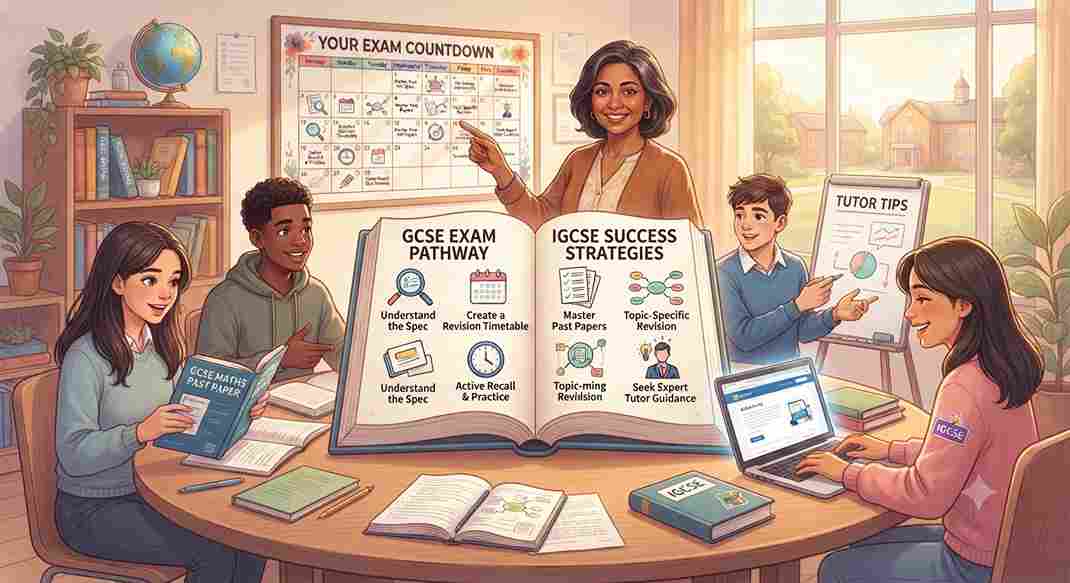
For students aged 14 to 16, GCSE and IGCSE examinations represent a major academic turning point. These qualifications form the crucial bridge between lower secondary education and advanced studies like A-Levels, the IB Diploma, or vocational pathways.
With rigorous external examinations covering a broad range of subjects, exam season can quickly feel overwhelming. However, success is rarely about luck—it is about strategy, consistency, and expert guidance.
In this comprehensive guide, our experienced online tutors share proven, actionable strategies to help your teenager master their GCSE and IGCSE exam preparation without burning out.
1. Understand the Exam Board and Assessment Structure
Not all exams are created equal. Different subjects and boards—such as Cambridge Assessment International Education (CAIE), Pearson Edexcel, and AQA—have distinct exam styles, question weightings, and mark schemes.
- Actionable Advice: Early in the academic year, download the exact syllabus (specification) for every subject your child is taking. Look closely at the assessment objectives. Does the exam test factual recall, analytical writing, data interpretation, or practical experimentation? Knowing what examiners are looking for changes how your child studies.
2. Build a Realistic Revision Timetable (And Stick to It)
Cramming the night before an exam is a recipe for anxiety and mediocre results. Effective GCSE/IGCSE prep requires spaced repetition and steady pacing.
- The Pomodoro Technique: Encourage study sessions broken down into manageable blocks—such as 25 minutes of focused revision followed by a 5-minute break. This prevents cognitive fatigue and keeps concentration high.
- Prioritize Weak Areas: It is human nature to spend time reviewing subjects we already enjoy. Help your child audit their strengths and weaknesses so that revision time is aggressively allocated to challenging topics.
3. Master Active Revision Techniques
Reading textbooks passively and highlighting random paragraphs feels productive, but it is an inefficient use of time.
- Active Recall: Use flashcards (physical or digital tools like Anki) to test memory rather than just recognizing concepts on a page.
- Feynman Technique: Have your child try explaining a complex scientific process or historical event in simple terms, as if teaching it to a younger sibling. If they stumble, they’ve found a knowledge gap.
- Mind Mapping: For subjects like History, Geography, or Biology, drawing interconnected mind maps helps link major themes together.
4. Conquer Past Papers Under Timed Conditions
The single most effective predictor of exam success is past paper practice. Knowing the content is only half the battle; knowing how to answer exam questions under strict time constraints is what secures top grades.
- Simulate Exam Conditions: Once revision is underway, have your child attempt past papers in a quiet room with phones turned off and a timer running.
- Mark Scheme Analysis: After finishing a paper, use the official examiner mark scheme (and examiner reports) to grade it. Pay close attention to why marks were awarded or lost. Understanding common pitfalls helps students avoid repeating them.
5. Prioritize Well-being and Exam Day Readiness
High performance requires a healthy body and mind. Chronic sleep deprivation and exam stress drastically impair working memory and problem-solving abilities.
- Sleep Hygiene: Ensure your teenager gets 8 to 9 hours of sleep, especially during exam weeks. Brain consolidation happens primarily during deep sleep.
- Mental Check-ins: Keep communication open. Remind your child that while GCSEs and IGCSEs matter, they do not define their entire worth.
- Practical Prep: The evening before the exam, ensure all stationery, calculators, ID cards, and exam entry slips are organized so exam morning is entirely stress-free.
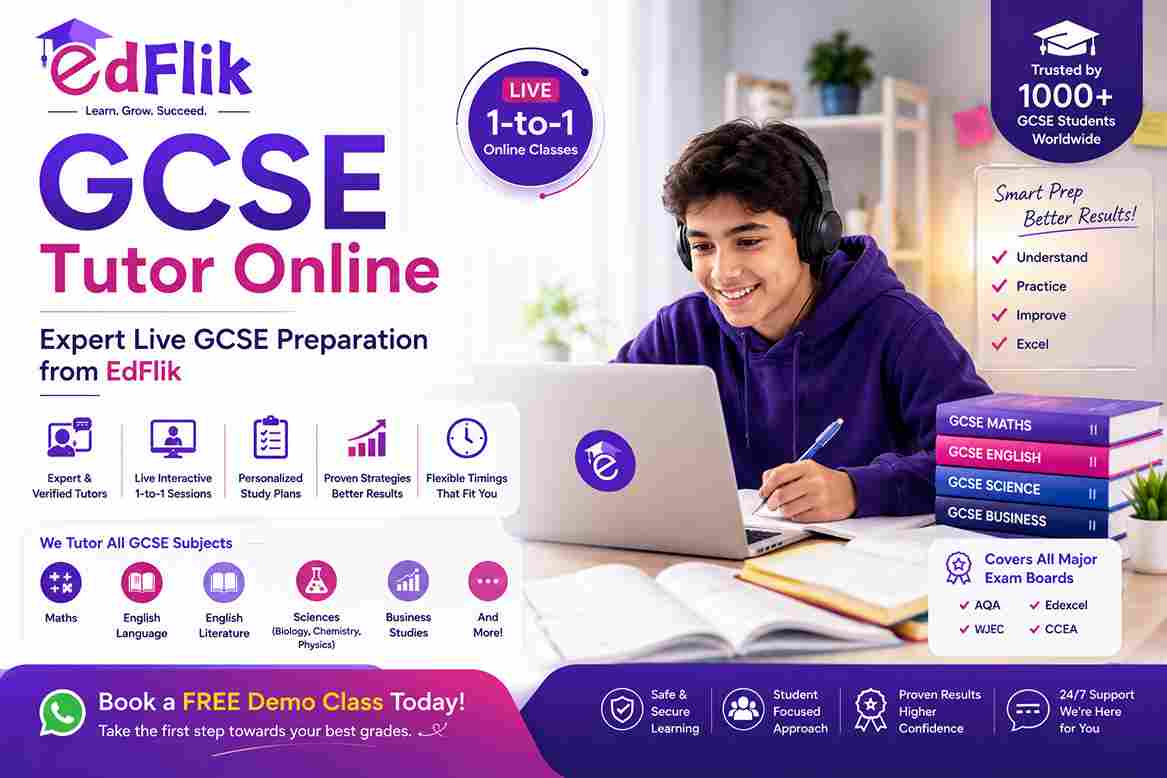
Looking for personalized support to help your child ace their GCSE or IGCSE exams? EdFlik offers expert, 1-to-1 online tutoring across all major subjects, tailored to every student's unique pace.Book a Free Demo Class Today!
Frequently Asked Questions (FAQs)
Q1: What is the difference between GCSE and IGCSE?
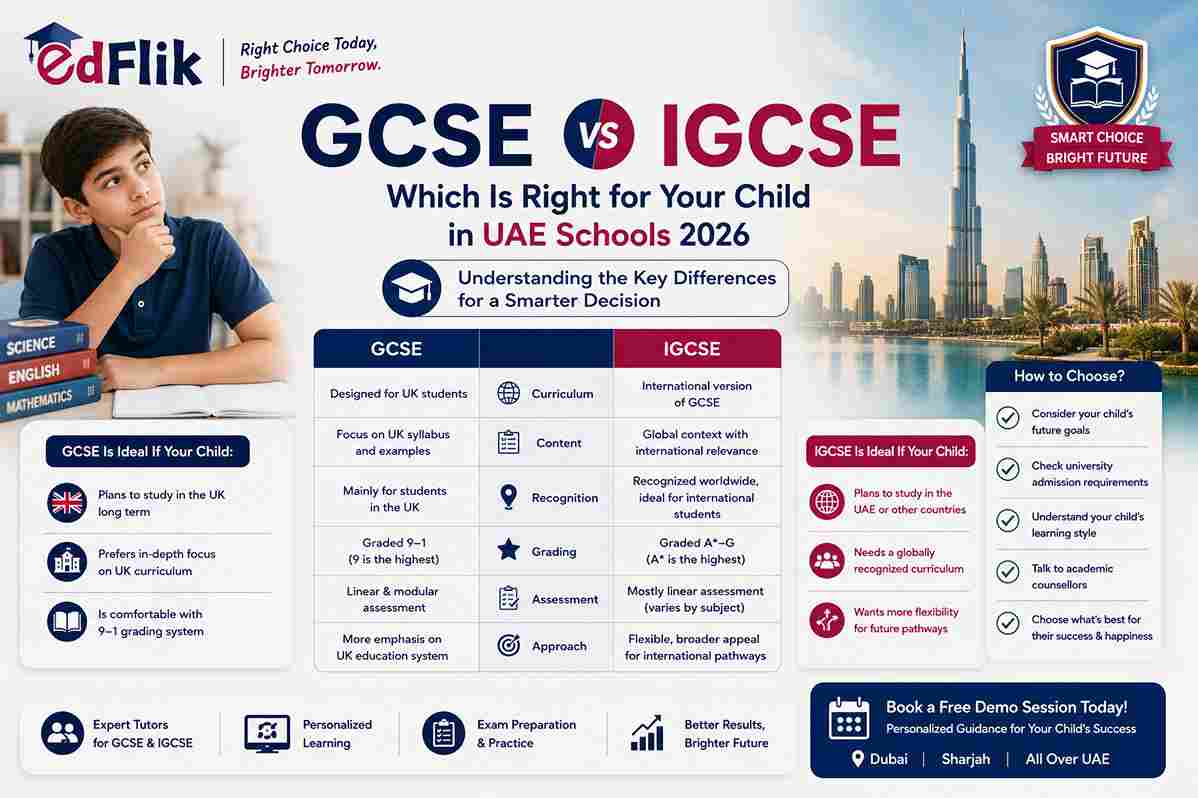
Ans: GCSEs are traditional national qualifications taken by students in the UK (and some international schools), while IGCSEs (International GCSEs) are designed specifically for an international student body, featuring 100% external examinations in many subjects and coursework options tailored to global contexts. Both are widely respected by universities worldwide.
Q2: When should my child start intense GCSE/IGCSE revision?
Ans: While continuous revision throughout Grade 10 and 11 is ideal, structured, intensive exam preparation using past papers should ideally begin 3 to 4 months before the final exams take place in May/June.
Q3: How many subjects should a student take for GCSE/IGCSE?
Ans: Most students take between 7 and 9 subjects, typically including English Language, English Literature, Mathematics, and Sciences (Combined or Triple Science), alongside humanities and elective choices.
Q4: How can EdFlik help my child prepare for GCSE/IGCSE exams?
Ans: EdFlik provides experienced, certified 1-to-1 online tutors who specialize in GCSE and IGCSE curricula. Our tutors break down difficult concepts, guide students through past paper drills, and build targeted exam strategies to maximize confidence and scores.