How to Synthesize Two Subjects in the IB MYP Interdisciplinary (IDU) Onscreen Exam
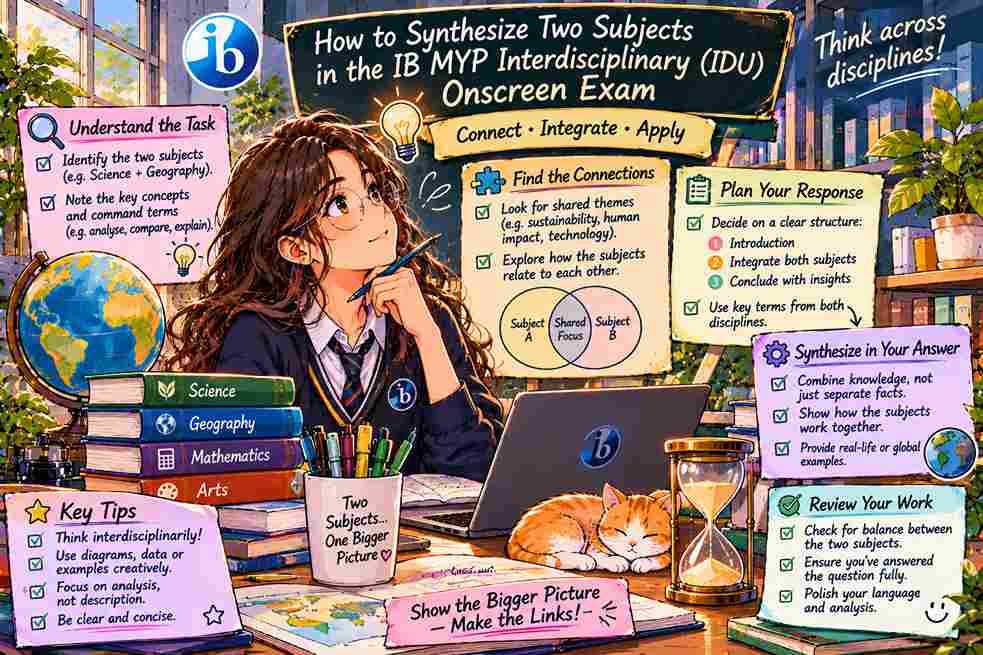
By EdFlik Team | November 19, 2026
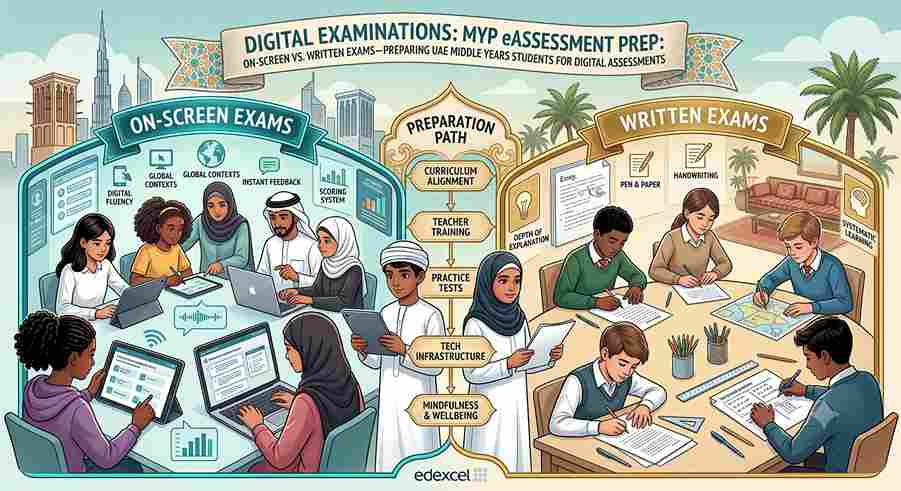
For Year 5 (Grade 10) students across Dubai, Abu Dhabi, Sharjah, and the Northern Emirates completing the International Baccalaureate Middle Years Programme (IB MYP), the Interdisciplinary Unit (IDU) eAssessment is one of the most distinctive—and frequently misunderstood—components of the MYP certificate. Unlike single-subject onscreen exams (such as MYP Mathematics, Sciences, or Individuals and Societies), the 2-hour, 15-minute Interdisciplinary onscreen examination tests your ability to bring together two distinct MYP subject groups (for example, Sciences and Individuals and Societies, or Mathematics and Design) to explore a real-world global context, analyze multiple perspectives, and produce a unified outcome.
Many capable MYP students run into trouble on IDU day because they treat the exam as two separate mini-tests stitched together: answering one question using science concepts and the next using humanities concepts, without ever synthesizing them. In IB MYP Interdisciplinary assessment criteria, simply placing facts from two subjects side by side is not true synthesis. Synthesis happens when concepts, methods, evidence, or lenses from both disciplines actively interact to generate deeper insight, solve a complex problem, or explain a nuance that neither subject could capture alone.
Strong performance in the MYP IDU onscreen exam not only supports your overall MYP certificate outcome but also builds the exact cross-disciplinary thinking required for the IB Diploma Programme (DP)—particularly Theory of Knowledge (TOK), Extended Essay (EE) interdisciplinary investigations, and Internal Assessments (IAs).
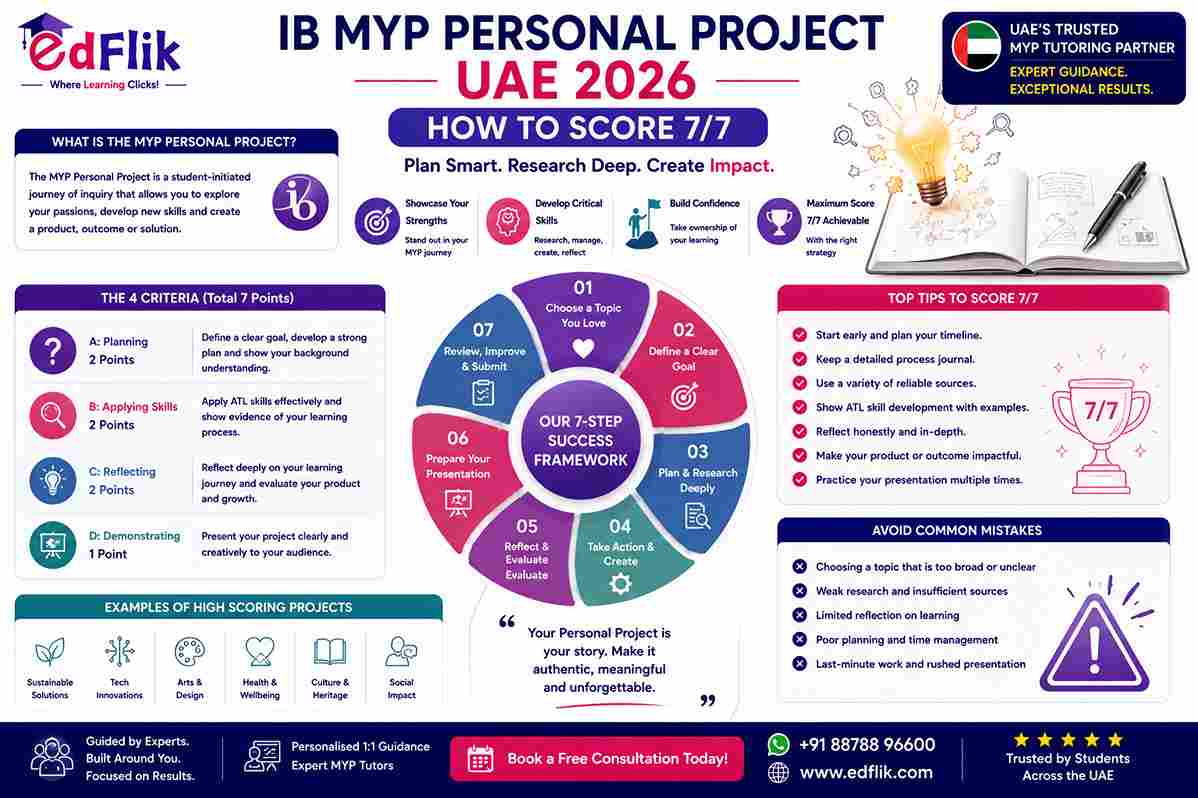
This masterclass guide breaks down what "synthesis" really means in the IB MYP IDU onscreen exam, maps out the three core MYP IDU assessment criteria, provides a practical step-by-step synthesis workflow, walks through a concrete cross-subject example, highlights common exam traps, and includes 100% copy-paste JSON-LD schema markup.
Key Takeaways
- Synthesis Means Integration, Not Juxtaposition: Putting a science fact in paragraph one and an economics point in paragraph two is juxtaposition. True synthesis weaves concepts, data, and perspectives from both subjects together to build a single, stronger explanation or solution.
- Anchor Every Response in the Global Context and Key/Related Concepts: Read the pre-release material and onscreen stimulus carefully to identify the Global Context, Statement of Inquiry, and disciplinary concepts from each subject.
- Respect Disciplinary Grounding First: Before blending two subjects, show that you understand each discipline's valid methods, evidence, and limitations—synthesis is strongest when built on accurate disciplinary foundations.
- Communicate for a Purpose and Audience: Many IDU tasks ask you to create a product, proposal, campaign, or recommendation for a specific audience; align tone, structure, and evidence to that exact task.
Part 1: What Does "Synthesis" Mean in the IB MYP IDU?
In everyday schoolwork, students often hear "combine two subjects" and think of listing two separate viewpoints. In the IB MYP Interdisciplinary framework, synthesis is the purposeful integration of knowledge, concepts, perspectives, or methods from two or more disciplines to advance understanding, explain a phenomenon, or propose a realistic response to a complex issue.
As illustrated by the overlapping intersection in the diagram above, effective interdisciplinary work identifies both what belongs uniquely to each subject and what meets in the middle—where a shared problem, pattern, or system requires two lenses at once.
Side-by-Side: Juxtaposition vs. True Synthesis
| Feature | Weak Approach: Juxtaposition | Strong Approach: True Synthesis |
| Structure | "In Science, carbon emissions cause warming. In Individuals and Societies, factories create jobs." | "While industrial expansion boosts local employment and tax revenue, rising emissions alter local ecosystems—requiring policy choices that weigh economic livelihood against environmental thresholds." |
| Use of Evidence | Quotes a chart from one source and a quote from another without linking them. | Cross-checks quantitative data and qualitative/ethical perspectives to test assumptions or spot trade-offs. |
| Conclusion | Repeats two separate points at the end. | Offers an integrated judgment, solution, or limitation informed by both disciplines. |
Part 2: Navigating the Three IB MYP IDU Assessment Criteria
The MYP Interdisciplinary onscreen exam assesses your work against three core criteria (Criterion A: Evaluating, Criterion B: Synthesizing, and Criterion C: Reflecting). Understanding what each criterion demands helps you allocate time and structure your onscreen responses:
                  IB MYP IDU ONSCREEN ASSESSMENT PILLARS
                                     |
  +----------------------------------+----------------------------------+
  |                                                                     |
CRITERION A: EVALUATING            CRITERION B: SYNTHESIZING          CRITERION C: REFLECTING
• Analyze disciplinary concepts,   • Integrate knowledge, methods,    • Reflect on how new
  sources, or perspectives.          or concepts from both subjects.    interdisciplinary understanding
• Identify strengths, limitations,   • Create a coherent product,       deepens insight into the issue.
  bias, or assumptions.                argument, model, or solution.    • Evaluate limitations of the
                                                                        interdisciplinary approach itself.
Practical Checklist for Each Criterion:
- Evaluating (Criterion A): Name the specific disciplinary ideas or perspectives present in the sources. Note where a source is strong (e.g., empirical measurements, statistical trends) and where it is limited (e.g., missing social context, small sample size, or stakeholder bias).
- Synthesizing (Criterion B): Explicitly link Subject 1 and Subject 2 inside the same argument or product. Show how combining them changes the conclusion or makes a proposed solution more feasible.
- Reflecting (Criterion C): Step back at the end of your response. Explain what you learned because you combined the two subjects, and note any remaining uncertainties or trade-offs that require further investigation.
Part 3: Step-by-Step Workflow for Synthesizing Two Subjects Onscreen
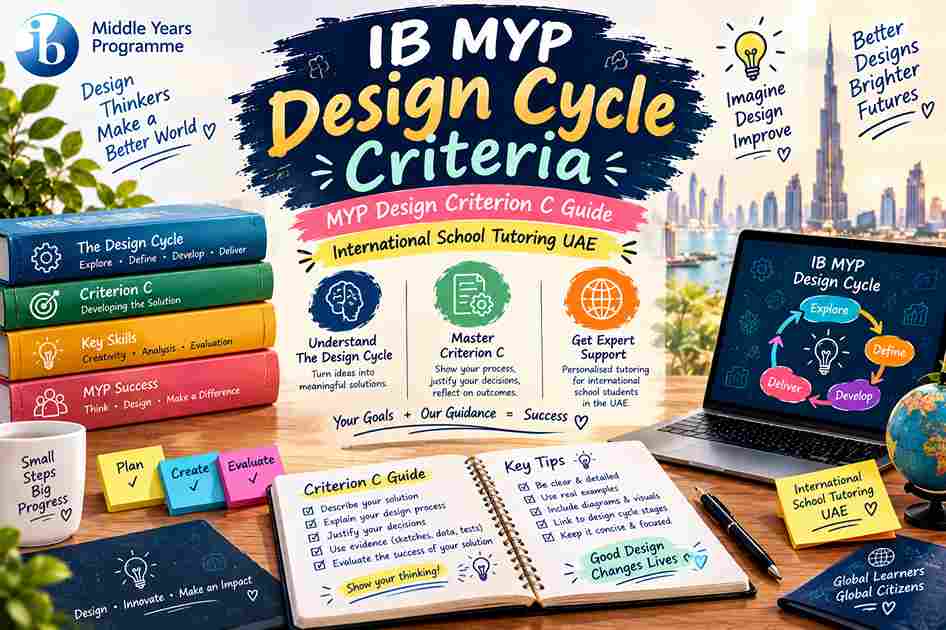
During the 2-hour, 15-minute onscreen exam, use this 4-step workflow whenever a prompt asks you to analyze an issue or produce an interdisciplinary outcome:
                 4-STEP ONSCREEN SYNTHESIS WORKFLOW
                                   |
  Step 1: Map Both Subject Lenses ---> List 2–3 key concepts, terms, or methods from each subject
                                       that connect directly to the prompt and pre-release theme.
  Step 2: Find the Tension/Bridge ---> Identify where the two subjects reinforce each other OR create
                                       a tension/trade-off (e.g., cost vs. ecological impact).
  Step 3: Weave in a Single Thread  ---> Write integrated paragraphs/sections where each claim uses
                                       evidence or concepts from BOTH disciplines.
  Step 4: State Limits & Next Steps ---> Conclude with a balanced reflection on feasibility, trade-offs,
                                       and what remains unresolved.
The "Bridge Sentence" Technique
Whenever you move from one disciplinary point to another, use a bridge sentence that explicitly connects the two subjects rather than starting a fresh, disconnected thought:
- "Linking this ecological measurement to economic incentives shows why..."
- "While the mathematical model projects rapid growth, cultural and behavioral factors may slow adoption because..."
- "Combining historical context with scientific evidence reveals that..."
Part 4: Worked Interdisciplinary Example (Sciences + Individuals and Societies)
Sample Scenario: A coastal city in the region faces recurring seasonal algal blooms along its shoreline, affecting marine biodiversity, public health advisories, coastal tourism, and local fishing businesses. You are asked to write an interdisciplinary proposal recommending a sustainable response for municipal planners.
Weak (Un-Synthesized) Draft Excerpt:
Sciences shows that excess nutrients like nitrates and phosphates cause algal blooms and can lower dissolved oxygen in water. Individuals and Societies shows that tourism and fishing bring income and jobs to coastal communities, and stricter rules can affect businesses.
Why this falls short: Both statements are true, but they sit in separate silos. There is no explanation of how nutrient sources connect to human activity, why a single policy affects both ecosystems and livelihoods, or how to balance them.
Strong (Synthesized) Draft Excerpt:
Integrating Sciences and Individuals and Societies shows that seasonal algal blooms are driven by nutrient runoff—such as fertilizers and untreated waste—interacting with warm water temperatures, while their severity is shaped by human land-use and economic priorities along the coast. Although shutting down all nearby commercial or recreational activity immediately might limit short-term human exposure, doing so would abruptly reduce income for local fishers and hospitality workers without addressing upstream nutrient inputs. A more sustainable interdisciplinary response pairs targeted nutrient management and water-quality monitoring (addressing the biological trigger) with phased support and clear public communication for affected businesses (addressing economic livelihoods and community trust), while recognizing that enforcement costs and cross-border or watershed factors may still limit local control.
Why this works well:
- Uses accurate disciplinary concepts from both Sciences (nutrient runoff, dissolved oxygen/algal dynamics, water-quality monitoring) and Individuals and Societies (economic livelihoods, stakeholder trade-offs, policy feasibility, public communication).
- Integrates both lenses within the same reasoning chain rather than alternating isolated paragraphs.
- Includes realistic limitations and trade-offs.
Part 5: Top 4 Exam Traps That Cost IB MYP IDU Students Marks
- Treating the Prompt as Two Separate Questions: Writing half an answer for Subject A and a separate half for Subject B without connecting them. Always re-read your draft to check that key paragraphs actively link both disciplines.
- Ignoring the Required Format or Audience: Producing a generic essay when the onscreen task asks for a proposal, briefing, campaign outline, or structured evaluation for a specific audience. Match your tone and headings to the task instructions.
- Using Vague Buzzwords Instead of Real Subject Concepts: Writing "science proves" or "society thinks" instead of naming concrete concepts, data trends, or disciplinary methods from the stimulus and your MYP courses.
- Running Out of Time Before the Final Reflection: Spending too long on early analytical boxes and rushing the final reflection, which is essential for demonstrating full interdisciplinary understanding.
For expert 1-on-1 online tutoring support to master IB MYP Interdisciplinary (IDU) onscreen exam technique, subject-specific MYP criteria, and IB Diploma preparation across the UAE, book a class on EdFlik.
Frequently Asked Questions (FAQs)
Q1: How long is the IB MYP Interdisciplinary (IDU) onscreen examination?
Ans: The IB MYP Interdisciplinary onscreen examination is 2 hours and 15 minutes long and is taken on-screen during the MYP eAssessment session (typically at the end of MYP Year 5).
Q2: How can I practice synthesizing two subjects if my school hasn't covered the exact exam topic?
Ans: Practice pairing any two MYP subjects on a current real-world issue—such as urban heat islands (Sciences + Individuals and Societies), algorithmic recommendations (Mathematics + Design), or health messaging (Physical and Health Education + Language and Literature). Focus on identifying shared concepts, checking evidence from each lens, and explaining trade-offs.
Q3: Does the MYP IDU exam require memorizing textbooks from both subjects?
Ans: While foundational subject vocabulary and concepts help you interpret prompts quickly, the IDU exam heavily emphasizes applying concepts to provided stimulus materials, evaluating perspectives and limitations, synthesizing ideas across disciplines, and reflecting critically rather than reciting rote facts.