Robotics for Kids Online in the UAE: Age, Kit and Free Trial Guide
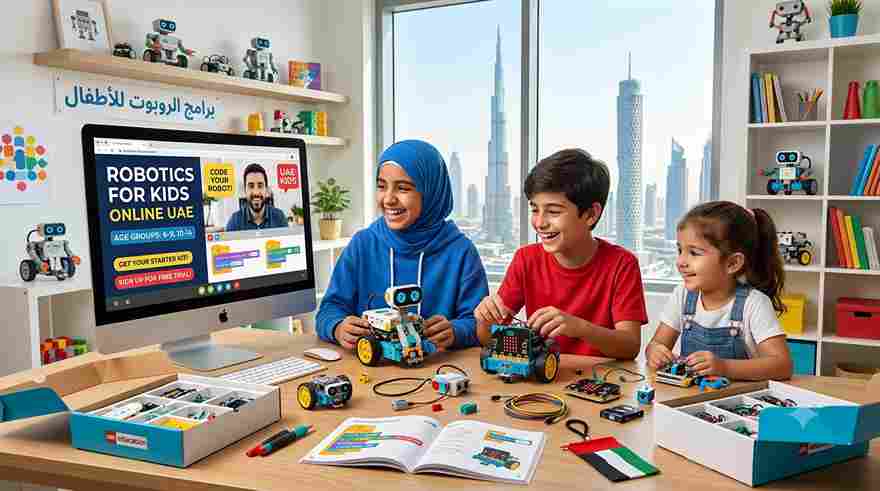
Is your child fascinated by how machines move, light up or respond to a button press? Robotics can turn that curiosity into a hands-on learning adventure. Many UAE parents are asking the same questions: how young is too young, does my child need special equipment and what does a live lesson actually look like? This guide answers those questions in plain language, so you can decide with confidence. At EdFlik, we believe learning should feel joyful, and robotics is a wonderful way to make that happen.
What Is Robotics for Children?
Robotics for children means learning how machines are designed, built and programmed to do a task. Young learners might build a simple moving model, test how a sensor responds or change a set of instructions to see what happens. Older children may plan more complex projects, such as a small vehicle that follows a path, and work through problems one step at a time.
The best robotics activities combine three things: creative building, clear thinking and the confidence to try again when something does not work. Those skills carry well beyond the workshop, into maths, science and everyday problem-solving.
What Age Should a Child Start?
There is no single right age, because children develop at different speeds. Many families start with simple, playful activities when children are around five or six. Children in the early teens can usually handle more detailed projects and longer sequences of instructions.
Rather than focusing on age alone, think about your child's interests and attention span. A child who loves building with blocks may enjoy robotics early, while a child who prefers reading may start with a gentler introduction. Your tutor can suggest a starting point based on what they see in the first lesson.
Do Children Need a Robotics Kit?
Not always. Some lessons use physical parts that children build and test. Others focus on planning and programming, or use simple everyday materials for early activities. Please ask the tutor what materials they recommend before you buy anything. This helps you avoid spending money on equipment that the lessons may not use.
If your child does need parts, your tutor can explain what to look for and how they will be used. Keep the first step simple and build up gradually as your child's interest grows.
What a Live Robotics Lesson Looks Like
A live, one-to-one robotics lesson is usually about one hour. A typical lesson might include:
1. A short warm-up, where the tutor and child talk about the last project.
2. A new challenge, such as making a sensor respond to light or sound.
3. Building or coding time, where your child tries ideas and the tutor asks guiding questions.
4. Testing and tweaking, because the first attempt rarely works perfectly, and that is part of the fun.
5. A quick reflection, where your child explains what they learned and what they would change next time.
Because the lesson is one-to-one, the tutor can see exactly how your child is thinking and offer support at the right moment. Children often feel more relaxed asking questions when no one else is waiting for a turn.
How Robotics Differs From Coding
Coding and robotics overlap, but they are not the same. Coding focuses on writing instructions that a computer follows. Robotics adds a physical or sensor-based element, so the instructions control something that moves, lights up or reacts. Many children enjoy both, and a good tutor can show how one supports the other.
If your child is new to programming, robotics can be a gentle way in. They see the results of their instructions in real time, which makes abstract ideas easier to grasp.
Turning Mistakes Into Progress
Every robotics project includes moments when something does not work. A motor turns the wrong way, a sensor reads the wrong value or a model falls over. These moments are not failures. They are the clues that help children learn how a system fits together. A good tutor treats each problem as a puzzle to solve together, and asks questions such as "What did you expect to happen?" and "What do you notice now?"
Children who learn to debug calmly often carry that patience into school and everyday life. You can support this at home by asking your child to describe what went wrong before they try to fix it. Simply putting the problem into words often reveals the answer. Celebrate the change they made, not only the final result.
Simple Ways to Support Learning at Home
- Ask your child to describe their project, step by step, to someone in the family.
- Encourage them to test a model more than once and note what changed.
- Visit a library or museum exhibit about machines together.
- Keep a project notebook with sketches and short notes.
- Praise persistence. A tower that falls and gets rebuilt is a real success.
Checklist: Before You Book a Free Trial
- Think about your child's interests, such as building, drawing or problem-solving.
- Ask the tutor what materials are needed, and whether any purchase is required.
- Check how long each lesson lasts and how often you would like to meet.
- Ask how the tutor tracks progress and shares updates with you.
- Ask which board or resources they use, and how the lessons link to school work.
How EdFlik Can Help
At EdFlik, we offer live, one-to-one online tutoring for children and teens aged 3 to 18, including coding, robotics and many other hobbies. Lessons are about one hour, and pricing starts from AED 45 per class. We aim to make every session friendly, clear and full of discovery, so your child feels excited to come back.
Every new family can book a free trial class. Your child can meet a tutor, share what they enjoy and try a first activity. There is no pressure to continue. If the trial is a good fit, you can then choose a plan that suits your family.
Ready to see what your child can build? Book a free trial class at www.edflik.com or email support@edflik.com, and we will help you find a time that works.
Conclusion
Robotics gives children a chance to build, test and imagine, all at the same time. You do not need to start with expensive equipment or a perfect plan. Begin with curiosity, choose a friendly tutor and let your child lead the way. With steady encouragement, a small robot project can grow into a lifelong interest in how things work.
Frequently Asked Questions
What age should a child start robotics?
Many children start simple, playful activities around five or six, and older children can handle longer projects. Think about your child's interests and attention span. Your tutor can suggest a starting point after a first lesson.
Do children need robotics kits?
Not always. Some lessons use physical parts, while others focus on planning and programming or use simple everyday materials. Ask the tutor what they recommend before buying anything, so you only purchase what the lessons will use.
What does a live robotics lesson look like?
A typical one-hour lesson includes a short warm-up, a new challenge, building or coding time, testing and a reflection at the end. The tutor guides your child with questions, so they learn to solve problems themselves.
How is robotics different from coding?
Coding focuses on writing instructions for a computer. Robotics adds a physical or sensor-based element, so the instructions control something that moves or reacts. Many children enjoy both, and each supports the other.
How do I book a free trial class?
Visit www.edflik.com or email support@edflik.com to book a free trial class. You can meet a tutor, share your child's interests and ask which materials, if any, you would need. There is no pressure to continue after the trial, so you can decide once you have seen a lesson.
More on Enrichment & Skills